Table of Contents
- Why Proper Maintenance of Custom Printed Sports Uniforms Matters
- 1. Establish Sports Uniform Care Instructions Before First Wear
- 2. How to Wash a Jersey Without Ruining Printed Designs
- 3. Does Vinegar Remove Stains from Uniforms Safely
- 4. How to Dry Printed Sports Uniforms Correctly
- 5. Protect Prints from Fading and Cracking
- 6. Store Custom Uniforms Properly Between Seasons
- 7. Repair Minor Print Damage Before It Worsens
- Frequently Asked Questions
Last Updated: October 5, 2026
Why Proper Maintenance of Custom Printed Sports Uniforms Matters
To maintain custom printed sports uniforms as an investment in your team’s identity, you need the right approach. They represent your brand on the field, court, or diamond. But that investment only pays off if you maintain them properly.
Poor care ruins printed designs fast. Cracks appear in the print. Colors fade. The fabric weakens. What started as a sharp, professional uniform becomes a faded, damaged mess within a season or two.
The good news: maintaining custom printed sports uniforms doesn’t require special expertise. It requires knowing the right steps and following them consistently.
The teams that do this well follow a clear maintenance routine. They understand how different printing methods respond to washing, drying, and storage. They catch small problems before they become expensive replacements.
This guide covers the seven most important ways to maintain custom printed sports uniforms. Follow these steps, and your uniforms will stay vibrant, durable, and professional looking season after season.
1. Establish Sports Uniform Care Instructions Before First Wear
The worst time to learn about care is after you’ve damaged a uniform. The best time is before anyone wears it.
When you receive custom printed sports uniforms, review the care label immediately. Different printing methods require different approaches. Screen-printed designs handle heat differently than sublimated uniforms. Embroidered logos need different handling than digitally printed jerseys.
Ask your supplier for detailed care instructions specific to your uniforms. Get answers to these questions:
- What water temperature should you use?
- Can you use bleach or other harsh chemicals?
- What’s the best drying method?
- Should you dry clean or machine wash?
- Are there specific detergents to avoid?
Document these instructions. Share them with every coach, parent, and player who handles the uniforms. Print them out. Post them in the locker room. Email them to the team.
Create a short video showing proper washing and drying technique. Share it with your team before the first game. A 90-second video prevents more damage than a written instruction sheet ever will.
2. How to Wash a Jersey Without Ruining Printed Designs
Washing is where most damage happens. The wrong approach destroys prints, fades colors, and weakens fabric in just a few cycles.
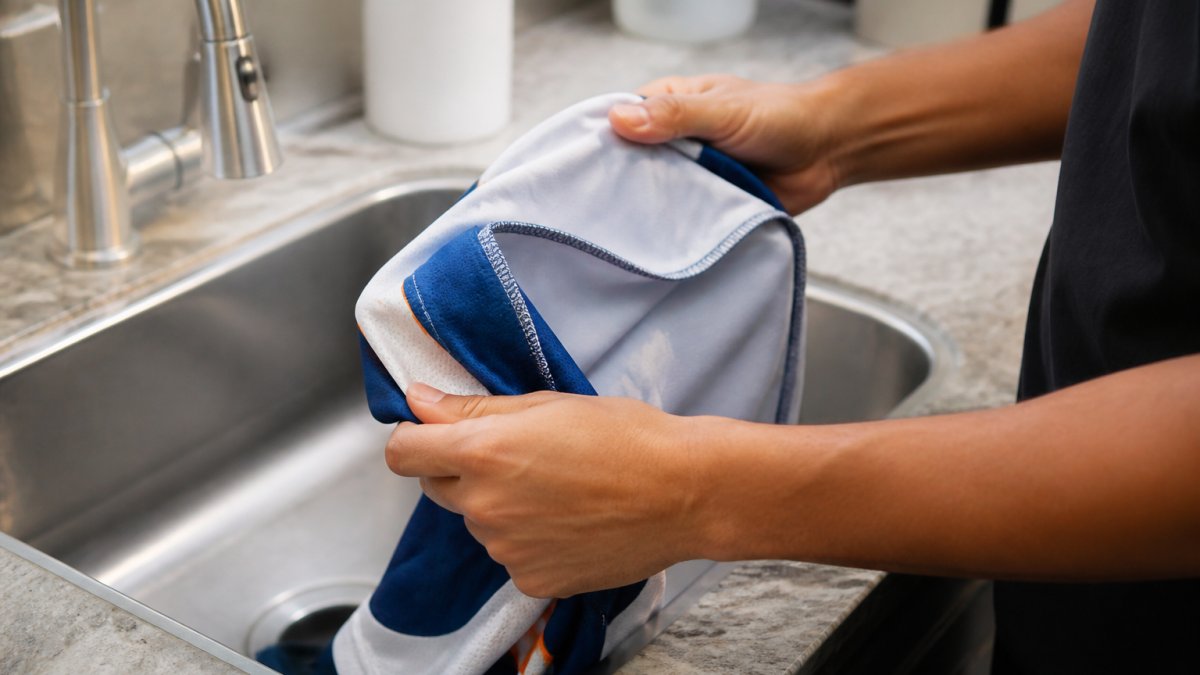
Turn Jerseys Inside Out
This single step prevents 70% of print damage. When you turn a jersey inside out before washing, the printed design faces inward. It doesn’t rub against the washing machine drum. It doesn’t experience direct agitation.
Make turning jerseys inside out a non-negotiable habit. Do this every single wash. Train your team to do it. Add it to your care instructions.
Use Cold Water and Mild Detergent
Hot water damages printed designs. It breaks down the ink or dye used in sublimation and screen printing. Heat also causes shrinkage in certain fabrics.
Always use cold water for custom printed sports uniforms. Cold water cleans effectively without damaging the print.
Use a mild detergent. Avoid heavy-duty formulas. Heavy-duty detergents contain harsh chemicals that fade colors and weaken fabric fibers. A standard, gentle detergent works perfectly.
Measure your detergent carefully. More detergent doesn’t clean better. It leaves residue in the fabric and requires extra rinses to remove.
Avoid Harsh Chemicals and Bleach
Bleach destroys printed designs. It strips color from the print and the fabric. Even diluted bleach causes permanent damage.
Never use bleach on custom printed sports uniforms. Not even on white uniforms.
Avoid these harsh chemicals:
- Oxygen-based cleaners
- Enzyme-based stain removers
- Fabric softeners
- Scent boosters
- Chlorine products
These chemicals break down the ink or dye in printed designs. They also weaken the fabric itself, shortening the uniform’s lifespan.
If you need to remove a stain, use a gentle approach. Spot-treat with cold water and mild soap before washing.
3. Does Vinegar Remove Stains from Uniforms Safely
Vinegar is a popular home remedy for stains. But is it safe for custom printed sports uniforms?
The answer depends on the printing method. For screen-printed and embroidered uniforms, diluted white vinegar can work on some stains without damaging the print. For sublimated uniforms, vinegar should be avoided.
Vinegar is acidic. It can fade certain dyes, especially in sublimated designs. It can also leave a smell in the fabric.
A safer approach: treat stains with cold water and mild soap before washing. Rinse immediately. Wash in cold water with gentle detergent.
For stubborn stains, consider professional dry cleaning that specializes in sports apparel.
Never soak a uniform in vinegar. Even diluted vinegar can damage prints over time. Test any stain-removal method on a hidden seam first.
4. How to Dry Printed Sports Uniforms Correctly
Drying is where many teams make their second major mistake. The wrong drying method fades prints, causes shrinkage, and damages fabric.
Air Drying Best Practices
Air drying is the safest method for maintaining custom printed sports uniforms. It eliminates heat damage. It prevents shrinkage. It preserves print quality.
Hang uniforms on a clothesline or drying rack in a shaded area. Direct sunlight fades prints, so avoid placing uniforms in bright sun.
If hanging isn’t possible, lay uniforms flat on a clean surface. Turn them inside out so the print faces down, away from air and light.
Allow uniforms to dry completely before storing them. Damp fabric invites mold and mildew.
Air drying takes longer than machine drying, but the results justify the time. Your uniforms will last two to three times longer.
Machine Drying Risks and Alternatives
Machine dryers generate heat. Heat damages printed designs. It fades colors. It can cause the print to crack or peel.
Avoid machine drying for custom printed sports uniforms whenever possible.
If you must use a dryer, use the lowest heat setting. Remove uniforms while slightly damp. This minimizes heat exposure.
Better alternatives to machine drying:
- Hang-dry in a shaded, well-ventilated area
- Lay flat on a clean surface
- Use a clothesline outdoors (but in shade)
- Air-dry indoors near an open window
These methods take longer but protect your investment.
5. Protect Prints from Fading and Cracking
Fading and cracking are the most visible signs of uniform damage. Both problems shorten the uniform’s useful life and hurt your team’s appearance.
Fading happens from repeated washing, heat, and sunlight exposure. Cracking happens from heat, repeated flexing of the fabric, and poor-quality prints.
Prevent both problems with these steps:
- Use cold water for every wash
- Air-dry instead of machine drying
- Store uniforms in a cool, dark place
- Avoid direct sunlight during storage
- Wash less frequently when possible (spot-clean instead)
- Use mild detergent only
- Turn uniforms inside out before washing
Quality matters here. Uniforms made with high-resolution digital printing, premium embroidery, or professional screen printing resist fading and cracking much better than low-quality alternatives. When you invest in custom printed sports uniforms from a supplier that uses durable printing methods, you’re protecting that investment through proper care.
The single biggest factor in preventing fading and cracking is avoiding heat. Cold water washing and air drying preserve print quality for years.
6. Store Custom Uniforms Properly Between Seasons
How you store uniforms during the off-season determines how they look when you bring them back out.
Poor storage causes mildew, mold, odors, and color fading. Good storage keeps uniforms fresh and ready for the next season.
Follow these storage guidelines:
- Wash and completely dry uniforms before storing
- Store in a cool, dry place (not a damp basement or hot attic)
- Use breathable storage containers (not plastic bags that trap moisture)
- Keep uniforms away from direct sunlight
- Store flat or on hangers (never crumpled in a box)
- Add a moisture absorber packet if storing in a humid climate
- Check uniforms every few months for signs of mold or mildew
A simple storage routine:
| Step | Action | Why It Matters |
|---|---|---|
| 1 | Wash and air-dry completely | Prevents mold and odors |
| 2 | Inspect for damage | Allows time to repair before next season |
| 3 | Store in cool, dry place | Slows fading and prevents moisture damage |
| 4 | Use breathable containers | Allows air circulation |
| 5 | Check monthly | Catches problems early |
Many teams store uniforms in a climate-controlled storage room or closet. This is ideal. If that’s not available, a bedroom closet works better than a garage or basement.
7. Repair Minor Print Damage Before It Worsens
Small problems become big problems fast. A tiny crack in a print grows with every wash and wear. A loose thread in embroidery unravels over time.
Address damage immediately. Don’t wait until the off-season.
Common repairs:
- Peeling print edges: Use fabric glue to re-adhere the edge. Press firmly for 24 hours.
- Cracked print: Small cracks can be sealed with clear fabric paint. Large cracks require professional re-printing.
- Loose embroidery: Use a needle and matching thread to re-stitch loose areas. Tie off securely on the back.
- Faded print: Minor fading is normal. Major fading requires professional re-printing.
- Torn fabric: Small tears can be sewn or patched. Large tears may require replacement.
When damage is beyond basic repair, contact your uniform supplier. It’s often cheaper to repair one uniform than to replace it.
Piercy Sports and Apparel specializes in high-resolution digital printing, premium embroidery, and screen printing that’s built to last.
Keep a repair kit in the locker room: needle, matching thread, small scissors, and fabric glue. Address small damage immediately before it spreads.
Maintaining custom printed sports uniforms isn’t complicated. It requires consistency and the right approach. Follow these seven steps, and your uniforms will stay vibrant, professional, and durable for years.
The investment you make in quality custom uniforms pays dividends when you care for them properly. Teams that follow a maintenance routine see uniforms last two to three seasons instead of one. That’s real savings for your organization.
Start with a clear care routine before uniforms arrive. Train your team on proper washing and drying. Store uniforms correctly between seasons. Address damage early. These habits protect your investment and keep your team looking sharp.
Ready to invest in custom printed sports uniforms built to last? Piercy Sports and Apparel creates durable designs with high-resolution digital printing, premium embroidery, and professional screen printing. Our uniforms are engineered for longevity and performance. Get started with Piercy Sports and Apparel and discover how quality uniforms combined with proper care transform your team’s identity season after season.
Frequently Asked Questions
How do you take care of custom printed sports uniforms to extend their lifespan?
Proper care starts with reading care instructions specific to your uniform’s printing method. Turn jerseys inside out before washing in cold water with mild detergent, avoid bleach and harsh chemicals, and air dry away from direct sunlight. Store uniforms in a cool, dry place between seasons. These steps protect printed designs from fading, cracking, and peeling while maintaining fabric integrity and color vibrancy throughout the season.
Can you put custom printed sports uniforms in the dryer?
Machine drying is not recommended for custom printed uniforms because high heat can damage printed designs, cause shrinkage, and weaken fabric fibers. Air drying is the safest method. Lay uniforms flat or hang them on a clothesline away from direct sunlight. If you must use a dryer, use the lowest heat setting and remove uniforms while slightly damp to minimize damage risk.
Should you turn printed jerseys inside out before washing?
Yes, turning printed jerseys inside out before washing protects the design from direct friction and abrasion in the washing machine. This simple step significantly reduces wear on printed graphics, embroidery, and screen-printed designs. It also helps prevent color fading and keeps printed details looking vibrant longer. Always turn uniforms inside out as part of your pre-wash routine.
Does vinegar remove stains from sports uniforms without damaging prints?
Vinegar can remove certain stains like sweat and grass, but use it cautiously on printed uniforms. Mix equal parts white vinegar and cold water, apply to the stain, and let it sit for 15-30 minutes before rinsing thoroughly. Test this solution on a hidden area first to ensure it won’t affect the print. For stubborn stains, consider professional cleaning services to avoid damage.