Table of Contents
- Why Do Screen Prints Crack
- How to Wash Screen Printed Shirts
- Drying Methods That Protect Your Print
- How to Fix Cracked Screen Print
- Professional vs. DIY Curing Differences
- Common Mistakes That Cause Cracking
- External Resources
- Frequently Asked Questions
Last Updated: September 3, 2026
Why Do Screen Prints Crack
Screen print cracking occurs when designs develop fractures and peeling within a few washes. The root cause lies in the interaction between three factors: ink chemistry, fabric composition, and the stress the garment endures over time.
Ink Chemistry and Curing
Plastisol ink, the most common choice for screen printing, requires heat to cure properly. When cured correctly, it creates a flexible layer that moves with the fabric. Undercured ink remains tacky and brittle; overcured ink becomes rigid and loses elasticity, both cause cracking.
Professional equipment achieves precise temperature control and timing for uniform curing. DIY methods like household dryers often result in uneven heat distribution and weak points where cracks form.
Water-based inks cure through evaporation and are more sensitive to humidity. If they don’t dry completely before washing, the ink separates from the fabric, leading to cracking.
Fabric Composition and Tension
Not all fabrics hold screen prints equally. Cotton, polyester, and blended fabrics each have different elasticity levels. Fabric tension during printing affects how ink bonds with fibers. If stretched too tightly, the fabric returns to its natural state after printing and the ink cracks. If too loose, the ink doesn’t transfer evenly, creating thin spots that crack easily.
Synthetic fabrics like polyester are problematic because ink sits on the surface rather than absorbing into fibers, making it more susceptible to mechanical stress. High-quality blended fabrics like 50/50 cotton-poly provide the best balance between ink adhesion and durability.
Heat and Mechanical Stress
Every hot dryer cycle causes the ink to expand and contract, creating microscopic fractures that eventually become visible cracks. Mechanical stress from abrasion, when printed graphics rub against other garments, wears away the ink layer. Garments receiving heavy wear experience accelerated cracking if the print isn’t designed to withstand that use.
How to Wash Screen Printed Shirts
Proper washing is the most critical factor in preventing screen print cracking. The right technique extends print life by years.
Step 1: Turn Garments Inside Out
Start every wash by turning the garment inside out. This keeps the printed graphic away from direct contact with other garments and the washing machine drum, protecting the ink from abrasion.
Step 2: Choose the Right Water Temperature
Cold water washing is your best choice for screen-printed garments. Hot water accelerates ink degradation and causes the print to crack more quickly. Cold water cleans effectively while minimizing thermal stress on the ink.
Step 3: Select Appropriate Detergent
Use mild, dye-free detergent without bleach or fabric softener. Harsh chemicals break down ink elasticity and cause premature cracking. Fabric softener is particularly damaging, it coats fibers and reduces ink adhesion over time. Choose detergents labeled as gentle or delicate, which have lower concentrations of harsh surfactants.
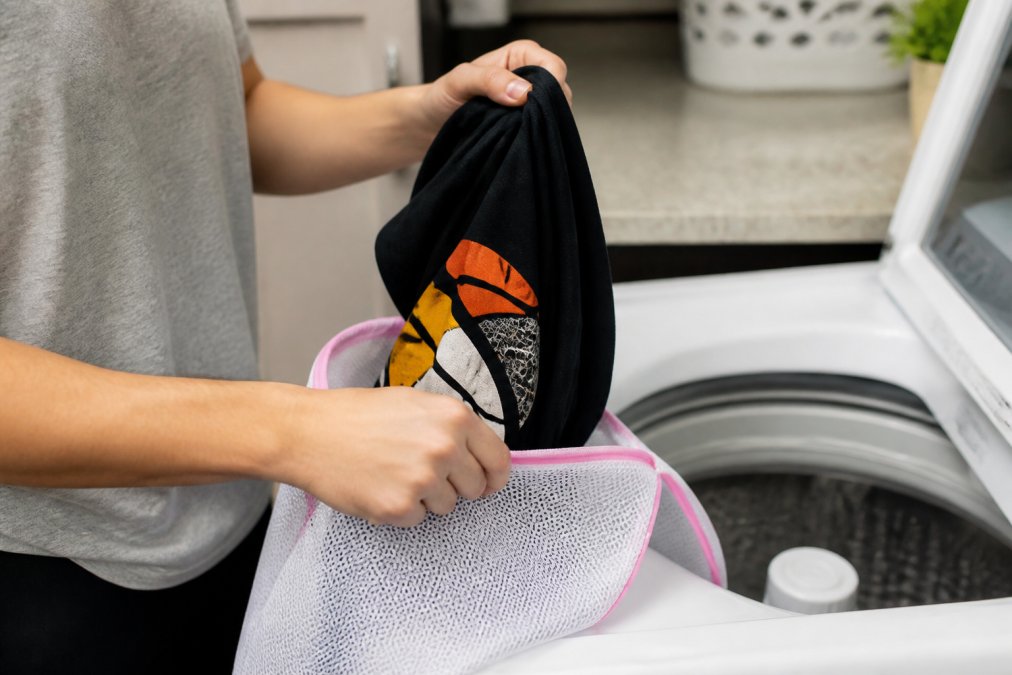
Step 4: Use Mesh Laundry Bags
Place screen-printed garments inside mesh laundry bags before washing. This creates a protective barrier that dramatically reduces mechanical stress and abrasion during the wash cycle. Mesh bags allow water and detergent to flow through while preventing direct contact between the garment and the drum or other clothes.
Step 5: Run Delicate Wash Cycles
Use the delicate or gentle cycle on your washing machine. These cycles use slower spin speeds and less agitation, reducing mechanical stress on the garment and ink. The slower spin speed also reduces the force pushing water out, meaning less wringing and twisting of the fabric.
Drying Methods That Protect Your Print
How you dry screen-printed garments is just as important as how you wash them. Heat is one of the primary causes of screen print cracking.
Air Drying and Line Drying
Air drying is the gold standard for protecting screen-printed apparel. Lay the garment flat on a clean, dry surface or hang it on a clothesline to dry naturally. This method eliminates all heat stress and allows the fabric to dry at its own pace. Hang the garment by the shoulders or sides rather than the hem to avoid stretching.
Tumble Dry Low Settings
If you must use a machine dryer, select tumble dry low and remove the garment while still slightly damp. This hybrid approach minimizes heat exposure while providing convenience. Never use high heat settings for screen-printed garments.
Avoiding High Heat Damage
If you need to remove wrinkles, use a dry iron on low setting with a protective cloth between the iron and the print. Never iron directly on the graphic. Store screen-printed garments in a cool, dry place away from direct sunlight.
How to Fix Cracked Screen Print
Despite your best efforts, screen prints can still crack. Understanding the severity of the damage helps you decide whether repair is possible.
Identifying Crack Severity
Minor cracks are small, isolated fractures in the ink layer that don’t extend to the fabric. Moderate cracks are larger fractures that may begin to separate from the fabric. Severe cracking involves large sections of the print separating or flaking away completely, making repair impractical.
Repair Techniques for Minor Cracks
Minor cracks can sometimes be stabilized using fabric paint or ink repair products. Clean the cracked area with a soft brush to remove loose ink, then apply a thin layer of fabric paint matching the original color. Another option is to apply a fabric patch on the inside of the garment to reinforce the area.
When Professional Reprint Is Needed
Moderate to severe cracking requires professional intervention. A screen printing shop can remove the old print and create a new one, essentially giving the garment a second life. Professional reprinting ensures proper curing and ink selection, resulting in more durable prints.
Professional vs. DIY Curing Differences
Professional screen printers use industrial heat presses with precise temperature control and consistent dwell times, typically 2-4 minutes depending on ink type and fabric weight. The result is uniform curing throughout the entire design.
DIY curing using household equipment like regular ovens, heat guns, or clothes dryers cannot achieve the same results. These methods lack precision temperature control and create uneven heat distribution, leaving some parts undercured or overcured.
If ordering custom apparel, ask your provider about their curing process. Professional equipment and proper technique are direct indicators that your print will last through hundreds of wash cycles.
Common Mistakes That Cause Cracking
Most screen print cracking can be traced back to preventable mistakes. The most common error is using hot water, which causes thermal stress that creates stress fractures. Machine drying on high heat accelerates cracking dramatically.
Mixing screen-printed garments with heavy items like jeans creates abrasion that wears away the ink layer. Fabric softener is surprisingly damaging, the coating reduces ink adhesion. Bleach attacks the ink directly. Storing screen-printed garments in hot environments accelerates ink degradation even when the garment isn’t being worn.
Screen print cracking is largely preventable with the right approach to washing, drying, and storage. Turning garments inside out, using cold water, choosing gentle detergents, and air drying work because they reduce the thermal and mechanical stress that causes ink to fail. When you order custom apparel from Piercy Sports and Apparel, we ensure proper curing using industrial-grade equipment, which means your prints start with maximum durability. Get started with Piercy Sports and Apparel and receive screen-printed designs built to last through years of wear and washing.
|
Prevention Method |
Best For |
Impact on Print Life |
|---|---|---|
|
Turn garments inside out |
All screen prints |
Eliminates direct abrasion damage |
|
Cold water washing |
All screen prints |
Reduces thermal stress and ink degradation |
|
Mesh laundry bags |
Frequently washed items |
Protects from mechanical friction |
|
Air drying |
All screen prints |
Eliminates heat damage entirely |
|
Delicate wash cycle |
Delicate or heavily printed designs |
Reduces agitation and spin stress |
|
Professional curing |
New custom orders |
Creates flexible, durable prints |
External Resources
For additional guidance on textile care and ink chemistry, consult the Federal Trade Commission’s care labeling rule, which provides standards for garment care instructions. The American Association of Textile Chemists and Colorists publishes testing standards for print durability and wash fastness. Research from the Textile Exchange’s sustainability reports addresses fabric composition impacts on garment longevity.
Frequently Asked Questions
Why do screen prints crack after washing?
Screen prints crack due to a combination of factors: inadequate ink curing, repeated mechanical stress from washing and drying, exposure to high heat, and friction from the dryer. Plastisol and water-based inks have different elasticity levels. When garments are washed in hot water, dried on high heat, or tumbled aggressively, the ink loses flexibility and the bond between ink and fabric weakens. Using mesh laundry bags, cold water, and air drying significantly reduces cracking risk.
Can I iron screen-printed shirts?
Ironing screen-printed shirts requires extreme caution. Never iron directly over the printed graphic—the heat can damage ink elasticity and cause cracking or peeling. If you must iron, use a dry iron on low heat and place parchment paper between the iron and the print. Better alternatives include air drying flat, using a garment steamer on low setting, or hanging the shirt to dry. When in doubt, avoid heat altogether to preserve the print’s durability.
How long do screen-printed designs typically last?
With proper care, quality screen prints can last for many washes before noticeable fading or cracking occurs. Professional curing ensures better ink saturation and adhesion, extending garment longevity significantly compared to DIY methods. The lifespan depends on ink quality, fabric composition, and washing practices. Using cold water, delicate cycles, inside-out washing, and air drying can extend print life. Bleach-free detergents and avoiding fabric softener also help maintain durability.
What’s the best way to preserve a screen-printed shirt long-term?
Store screen-printed garments in a cool, dry place away from direct sunlight, which can fade colors over time. Wash infrequently using cold water on a delicate cycle, turn inside out, use mesh laundry bags, and air dry completely. Avoid detergent residue by rinsing thoroughly. Never use bleach or fabric softener. For special items or vintage prints, consider hand washing in cool water with mild, bleach-free detergent. Proper storage and minimal washing are the keys to long-term preservation.
This article was written using GrandRanker