Table of Contents
- What Sets Custom Apparel Vendors Apart
- Screen Printing vs. Embroidery: Which Method Wins for Your Project
- Custom Apparel Vendor Comparison: Key Factors to Evaluate
- Team Uniform Ordering Checklist: What to Provide Your Vendor
- Getting an Accurate Custom Apparel Quote
- Why Vendor Reliability Matters for Team and Business Orders
- Frequently Asked Questions
Last Updated: October 6, 2026
What Sets Custom Apparel Vendors Apart
Choosing the right custom apparel vendor can make or break your team’s identity and budget. At Piercy Sports and Apparel, every order tells a story, a youth league uniform, corporate merchandise, or fan apparel.
A few factors separate a vendor that delivers from one that disappoints: turnaround times when your season starts in weeks, design support that fixes low-quality logo files instead of shipping pixelated jerseys, and durability that keeps custom apparel sharp after ten washes.
This guide covers what to evaluate when comparing custom apparel vendors, which decoration methods suit which projects, and how to get an accurate quote.
Screen Printing vs. Embroidery: Which Method Wins for Your Project
Screen printing excels for bold, solid designs with limited colors.
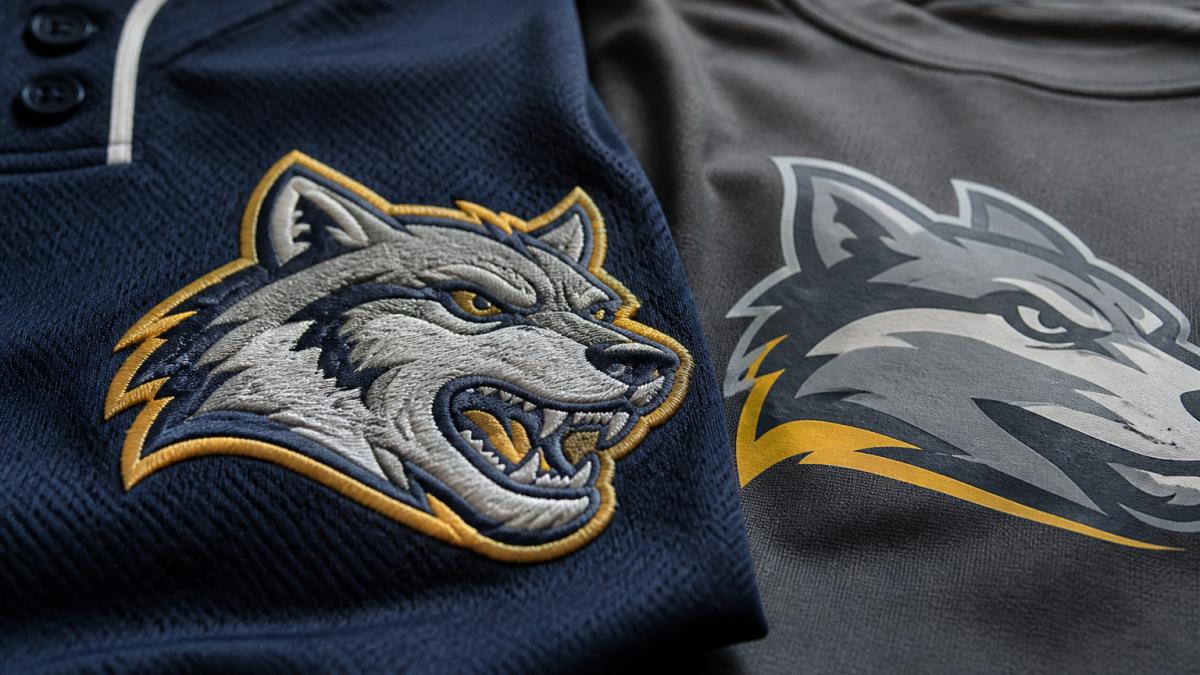
Embroidery creates a three-dimensional texture that feels premium and lasts longer. Thread sewn into fabric doesn’t fade, crack, or peel, it wears down over years.
For team uniforms, embroidery on chest logos combined with screen-printed numbers creates durability where it matters most. For high-end corporate apparel where longevity signals quality, embroidery is the stronger choice.
Custom Apparel Vendor Comparison: Key Factors to Evaluate
Most vendor pages say they offer screen printing and embroidery, but few explain how to choose between them, what a realistic minimum looks like, or how to spot a shop that will hand you blurry jerseys in three weeks.
Decoration Method Fit: A Side-by-Side View
The biggest cost and quality driver is which decoration method your project uses. Here is how the three most common methods compare.
| Factor | Screen Printing | Embroidery | Direct-to-Garment (DTG) / Digital |
|---|---|---|---|
| Best for | Bold, 1-4 color designs, large runs | Logos, text, left-chest marks, structured garments | Full-color, photo-style, small runs |
| Typical minimum | Often 12-24 pieces per design | Frequently 6-12 pieces per design | Can go as low as 1 piece |
| Setup | One screen per color; setup cost per color | Digitizing fee per logo (one-time) | Little to no setup |
| Durability | Excellent when properly cured; can crack if under-cured | Excellent; thread does not peel or fade | Good on cotton; can fade faster on dark or synthetic fabrics |
| Finish | Smooth, opaque ink on top of fabric | Raised, textured, premium feel | Soft, printed-into-fabric feel |
| Color limits | Cost rises with each added color | Thread colors limited by palette; gradients hard | Unlimited colors, gradients fine |
| Garment fit | Works on most fabrics | Best on polos, jackets, caps, woven shirts | Best on 100% cotton tees |
A common pattern is to combine methods: embroidered chest logo plus screen-printed back numbers on a team jersey, or embroidered corporate polos with a screen-printed event tee. Ask your vendor whether they run both in-house, shops that outsource one method lose control over turnaround and quality.
If your design has more than four colors, DTG or digital printing can be a cost-effective option. If you need a large quantity of shirts in two colors, screen printing can be a cost-effective choice.
Turnaround Times, Minimums, and Rush Capacity
Turnaround time is the calendar days from artwork approval to shipment, not from the day you first email the shop.
Minimum order quantities vary more than most buyers expect. Screen printing minimums commonly land at a certain number of pieces per design; embroidery minimums are often lower because there is no per-color screen setup; digital and DTG can go as low as one piece.
Ask three questions in this order:
- “What is your standard turnaround from art approval to ship?”
- “What is your rush option, and what does it cost?”
- “What is your minimum per design, and does that change by decoration method?”
A vendor who answers all three without deflecting is more reliable than one who hides them behind a quote form.
Design Support and Artwork Handling
This is where many vendors quietly fail. A designer sends a low-resolution JPG pulled from a decade-old website, or a PDF that looks crisp on screen but won’t separate cleanly for screen printing.
Ask directly: “If my file is not production-ready, what do you do?” The answer should include a digital proof before anything is printed or stitched. A shop that skips the proof step will ship you a surprise.
Durability and Quality Standards
Durability comes down to three things: fabric quality, ink or thread quality, and production technique. Screen-printed ink must be cured at the correct temperature, under-cured ink cracks and washes out, over-cured ink scorches fabric. Embroidery thread should be colorfast and stitched at consistent tension; loose tension shows as loops and puckering.
Ask for samples or photos of comparable work. Look for consistent stitch density, clean edges on printed graphics, and colors that match the proof. A shop proud of its output will have a portfolio ready.
Ordering, Storefronts, and Reorders
For schools, teams, and businesses that order repeatedly, ask whether the vendor offers an online storefront. A team store lets parents and employees order individually, in their own sizes, on their own schedule, while the organization keeps one design and one price.
Also ask how reorders work. A shop that keeps your screens and digitized logo on file can run a reorder in a fraction of the original lead time. A shop that discards them will charge setup again every season.
Score each vendor on five criteria, decoration method fit, minimum and turnaround, design support, durability standards, and reorder/storefront capability. The vendor that scores highest on all five is almost never the cheapest quote, and it is almost always the one that saves you money over a full season.
Team Uniform Ordering Checklist: What to Provide Your Vendor
Before requesting a quote, gather the information your vendor needs, missing details cause delays.
- Final roster count and size breakdown (youth XS-XL, adult S-XXL)
- Logo or design file in vector format (AI, EPS, or PDF) or high-resolution image (300 DPI minimum)
- Color specifications for your design (Pantone numbers or RGB values)
- Decoration method preference (screen printing, embroidery, or combination)
- Garment preferences (jersey style, fabric blend, collar type, sleeve length)
- Placement and size of design (chest, sleeve, back, full-front)
- Timeline: when do you need the finished uniforms?
- Budget range or cost-per-unit target
- Any special requests (name and number personalization, taped neck, reinforced shoulder seams)
The more complete your information, the faster you’ll get an accurate quote.
Getting an Accurate Custom Apparel Quote
A quote is only useful if you can compare it to another. Most buyers can’t, because vendors quote in different formats, some bundle everything into a per-piece price, some itemize, and some leave setup and shipping off the page. Here’s how to read a quote and what drives the number.
What Should Be Itemized on a Quote
A complete quote breaks out at least these lines:
- Garment cost per unit, the blank shirt, polo, hoodie, or jacket, priced by style and size. Extended sizes (2XL and up) usually cost more.
- Decoration cost per unit, priced by method, number of colors, stitch count, and print locations.
- Setup or digitizing fees, screen setup per color for screen printing; a one-time digitizing fee per logo for embroidery.
- Personalization, names and numbers, typically charged per piece.
- Shipping and handling, often the line buyers forget to ask about.
- Rush fees, only if you need a compressed timeline.
If a quote arrives as a single number with no breakdown, ask for the itemized version before comparing it to anything else.
The Cost Factors That Move the Price
Five variables drive almost every custom apparel quote:
- Quantity. Setup costs are fixed, so more pieces means a lower per-unit cost, the largest lever you control.
- Decoration method. Embroidery is priced by stitch count; screen printing by colors and locations; digital printing by print area and garment color.
- Number of print locations. A left-chest logo plus a full back print is two charges, not one.
- Garment quality. A premium ring-spun cotton tee costs more than a basic one, and the difference shows after a dozen washes.
- Timeline. Rush production compresses the shop’s schedule and carries a premium.
How Quantity Breaks Work
Quantity breaks are price tiers: one per-unit price for 12-23 pieces, lower for 24-47, lower again at 48+. Setup costs, screens, digitizing, machine calibration, spread across more units as the order grows.
This creates a practical decision point. If you need a certain number of pieces and the next break is at a slightly higher quantity, the extra pieces sometimes cost less than the per-unit savings across the original order. Ask your vendor to quote both quantities so you can see the actual math.
Always ask for the next quantity break up. “What would this cost at 24 instead of 20?” is a one-line email that frequently saves money or adds free extras.
Comparing Two Quotes Fairly
Two quotes for the same job can differ, and the difference is rarely random. Before picking the lower number, confirm both cover the same things:
- Same garment brand, style number, and fabric weight
- Same number of decoration locations
- Same number of colors or stitch count
- Setup and digitizing fees included or excluded
- Shipping included or excluded
- Proofs included
- Personalization included or excluded
A cheaper-looking quote often excludes setup, shipping, or personalization. Add those back and the gap narrows or reverses.
Questions to Ask Before You Approve
- “Is this quote all-in, including setup and shipping?”
- “What is the next quantity break, and what would it cost?”
- “What happens if a garment is defective or the print is off?”
- “Do you keep my screens and digitized logo for reorders?”
- “What is the payment schedule, deposit, net terms, or full upfront?”
A vendor who answers these clearly gives you a quote you can plan around; one who deflects tells you how the project will go.
Beware of quotes that are dramatically lower than every other bid. In custom apparel, an unusually low price can sometimes mean a thinner garment, fewer quality checks, or setup and shipping added later. The lowest quote is not always the lowest final cost.
Budgeting for a Full Season, Not Just One Order
Teams, schools, and businesses rarely order once. Budget for the season, not the single job: initial uniforms, mid-season replacements, spirit wear, and staff shirts. Vendors who keep your artwork on file and offer same-price reorders make later orders far cheaper and faster. Ask about reorder pricing upfront, it determines your true cost over a year, not the headline price on the first quote.
Why Vendor Reliability Matters for Team and Business Orders
A reliable vendor isn’t just about on-time delivery. It’s about a partner who communicates proactively, flags problems before they become disasters, and stands behind their work.
When your season starts soon, a vendor who delivers on schedule removes stress.
Piercy Sports and Apparel builds relationships with teams and businesses by treating each order as important.
Check reviews and ask for references.
Choosing a custom apparel vendor requires balancing cost, quality, speed, and support.
Frequently Asked Questions
What should I compare when choosing a custom apparel vendor?
Evaluate decoration methods (screen printing, embroidery, digital printing), turnaround times, minimum order quantities, design support, quality standards, and durability. Request samples and examples of previous work. Ask about pricing structure, reorder fees, and shipping costs. Check whether the vendor can handle mid-season roster changes or quick updates. A strong vendor should offer transparent timelines, handle low-quality artwork files, and stand behind their craftsmanship with durable finishes that survive repeated washing.
How do I choose between screen printing and embroidery for team apparel?
Screen printing works best for multi-color designs, large production runs, and budget-conscious orders. It produces vibrant, flat finishes. Embroidery is ideal for a premium look and smaller quantities. Embroidered logos resist cracking and peeling better over time and work well on caps, polo shirts, and jackets. Consider your design complexity, quantity, timeline, and budget. Many vendors offer both methods, so ask which suits your specific project.
What information should I provide when requesting a custom apparel quote?
Include your design file (high-resolution artwork, preferably vector format), quantity needed, garment type and color, decoration method preference, placement on the garment, and desired turnaround time. Specify whether you need rush production or have flexibility. Mention any special requirements like size ranges, custom sizing, or specific thread colors for embroidery. Clear, detailed requests help vendors give accurate quotes and prevent costly surprises or delays during production.
Can a custom apparel vendor handle small orders or mid-season changes?
Many vendors have minimum order requirements, but some specialize in smaller quantities for youth leagues and small organizations. Ask directly about minimums and whether reorder fees apply for mid-season updates. Reliable vendors understand that rosters change and should offer flexible ordering without excessive penalties. Discuss your typical order size and frequency upfront to find a partner who can scale with your needs without forcing you to overstock inventory.