Table of Contents
- What Team Apparel & Specialties Includes
- Custom Team Uniforms: Design, Quality, and Fit
- Screen Printing vs. Embroidery: Methods and Trade-offs
- Custom Apparel Turnaround Time: What to Expect
- Custom Business Apparel for Branding and Employee Identity
- What to Ask Before Ordering Team Apparel
- Choosing the Right Vendor for Your Project
- Frequently Asked Questions
Last Updated: October 7, 2026
What Team Apparel & Specialties Includes
Team apparel specialties encompass the full range of custom clothing, uniforms, and promotional merchandise designed to build brand identity and team unity. At Piercy Sports and Apparel, we understand that quality custom apparel goes far beyond basic t-shirts, it includes screen-printed jerseys, embroidered polos, performance uniforms, and branded merchandise that reflect your organization’s standards and values.
This category spans custom team uniforms for sports leagues, business apparel for corporate branding, school spirit wear for fundraising, and fanwear for event merchandise. The key differentiator is customization: every piece carries your logo, team name, or organizational identity, making it a tool for cohesion and recognition rather than generic clothing.
When you invest in team apparel and specialties, you’re selecting not just garments but also the decoration method, fabric quality, and production timeline that determine whether your investment looks professional for one season or lasts through years of use.
Custom Team Uniforms: Design, Quality, and Fit
Custom team uniforms demand precision in three areas: the garment itself, the decoration method, and the construction standards that ensure durability through repeated wear and washing.
Fabric and Construction Standards
The foundation of any quality uniform is the fabric and how it’s constructed. Most team apparel uses cotton-polyester blends because they balance comfort, durability, and ease of care. A 50/50 cotton-polyester blend offers breathability while resisting shrinkage and fading.
Beyond the blend, construction details matter significantly. Look for reinforced shoulder seams, taped neck openings, and double-stitched hems. These details prevent unraveling after repeated washing and heavy use. A garment with a rib collar maintains its shape through dozens of launderings, while a simple collar can stretch and distort.
Durability and Longevity Expectations
Quality custom apparel should withstand many wash cycles without significant fading, cracking, or peeling of printed or embroidered designs. This longevity depends entirely on the decoration method and the care taken during production.
Screen-printed designs that are properly cured and applied to quality fabric typically last the life of the garment. Embroidered logos, when stitched with quality thread and proper tension, outlast the fabric itself.
Many teams report that uniforms from discount providers show visible wear after one season, while properly constructed custom apparel from quality vendors remains game-ready for several years with standard care.
Screen Printing vs. Embroidery: Methods and Trade-offs
The decoration method you choose determines cost, durability, appearance, and turnaround time. Each has legitimate strengths, and the right choice depends on your specific project.
When to Choose Screen Printing
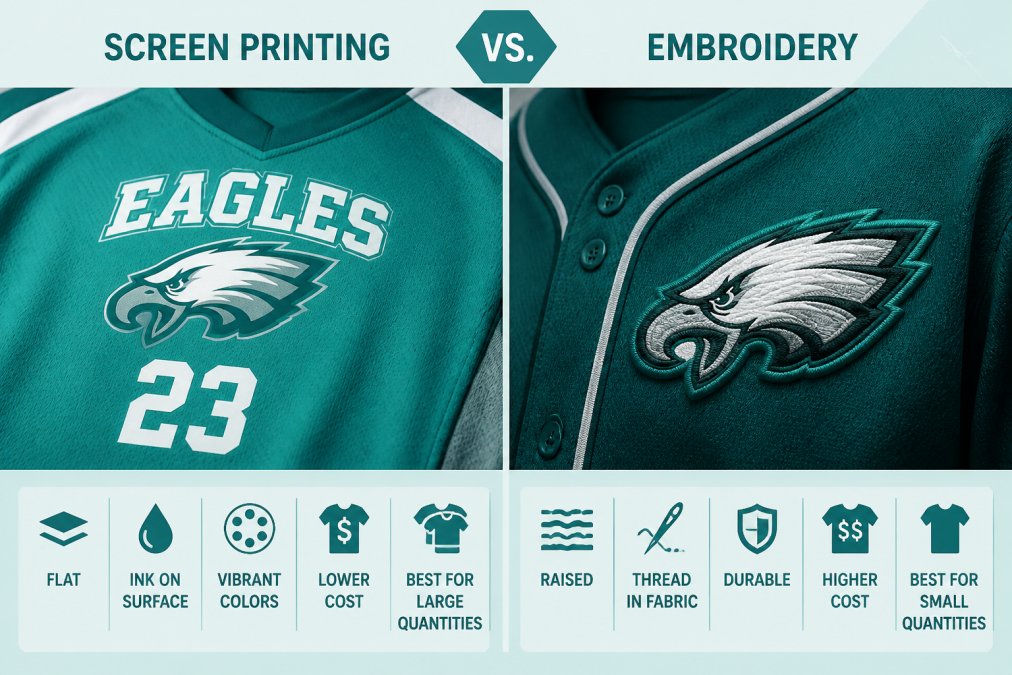
Screen printing applies ink directly to fabric through a mesh screen, creating a flat, vibrant image. It excels at photorealistic designs, gradients, and large coverage areas. The process is cost-effective at volume, once screens are created, each additional shirt costs less than embroidery.
Screen printing works best for:
- Multi-color designs with fine detail
- Large logos covering significant garment area
- Promotional merchandise where cost per unit matters
- Designs with gradients or photographic elements
The trade-off is longevity. Screen-printed designs can crack and peel if the ink isn’t properly cured or if the garment is subjected to excessive friction in the wash. Quality providers cure ink at high temperatures to lock it into the fabric, but this step is often skipped by budget vendors.
When to Choose Embroidery
Embroidery stitches thread directly into fabric, creating a three-dimensional, textured logo. It conveys premium quality and is nearly impossible to damage through normal wear. Embroidered logos look professional on polos, jackets, and performance wear.
Embroidery works best for:
- Premium uniforms and business apparel
- Small, detailed logos (within embroidery thread limitations)
- Garments that need to withstand heavy use and frequent washing
- Projects where durability is non-negotiable
The trade-off is cost and turnaround. Embroidery requires digitizing artwork and setting up machines, which takes longer and costs more per unit than screen printing, especially for small orders.
Digital Printing and High-Resolution Options
High-resolution digital printing bridges the gap between screen printing and embroidery. It applies ink directly to fabric using inkjet technology, allowing photorealistic designs at lower costs than embroidery and with faster turnaround than traditional screen printing.
Digital printing is ideal for:
- One-off or small-batch custom apparel
- Designs too complex for embroidery
- Projects requiring quick turnaround
- Full-color photographic designs
The limitation is durability on garments subjected to heavy friction. Digital prints fade faster than properly cured screen printing and don’t have the permanence of embroidery.
Custom Apparel Turnaround Time: What to Expect
Production timelines vary significantly based on the decoration method, order size, and whether you’re requesting rush service.
Production Timelines by Method
Screen printing typically requires a specific number of business days for standard orders. This includes artwork approval, screen creation, and production. Embroidery generally takes longer because digitizing artwork and setting up embroidery machines adds time. Digital printing often delivers the fastest turnaround since there’s no screen or machine setup required.
These timelines assume artwork is approved and ready. Delays in design approval, artwork revisions, or file corrections extend production significantly. Many vendors build in buffer time for back-and-forth communication, so providing clean, final artwork upfront accelerates the entire process.
Minimum Orders and Rush Options
Most screen printing providers require minimum orders to justify screen creation. Embroidery minimums are often lower since there’s no screen to create. Digital printing typically has no minimum, making it ideal for small orders or testing designs before committing to larger quantities.
Rush service is available from most vendors but comes with a premium. Expect to pay extra for expedited production. True rush is possible for screen printing and digital but may not be available for embroidery, which has inherent production constraints.
Custom Business Apparel for Branding and Employee Identity
Custom business apparel serves dual purposes: it creates a cohesive brand identity and signals professionalism to clients and customers. When employees wear branded polos, jackets, or t-shirts, they become walking advertisements for your organization.
Promotional Merchandise and Staff Uniforms
Staff uniforms build recognition and trust. A receptionist wearing a branded polo immediately identifies them as part of your team. This consistency matters in retail, hospitality, and service industries where customers interact directly with staff.
Promotional merchandise, branded t-shirts, hats, or jackets given away at events, extends your brand reach beyond your immediate team. Quality promotional items get worn repeatedly, providing ongoing brand exposure. Cheap merchandise gets thrown away, wasting the investment.
Design Support and Artwork Handling
Not every organization has professional design files ready to hand over. Many vendors offer design support to help you prepare artwork for production. This might include logo cleanup, file conversion, or minor design adjustments.
Piercy Sports and Apparel provides design support to ensure your artwork translates correctly to your chosen decoration method. A pixelated or low-resolution logo file becomes unusable when enlarged for screen printing. Our team can often improve artwork quality or suggest design adjustments that maintain your vision while ensuring production success.
What to Ask Before Ordering Team Apparel
Smart purchasing decisions come from asking the right questions upfront.
Quality Guarantees and Durability Standards
Ask potential vendors about their quality standards explicitly. Do they guarantee against fading, cracking, or peeling? What’s their process for curing screen-printed designs? How do they handle embroidery tension to prevent puckering? These questions reveal whether a vendor prioritizes durability or just cost.
Request examples of work completed 2-3 years ago. Ask how those uniforms have held up. A vendor confident in their work will provide references and real examples.
Reorder Flexibility and Mid-Season Changes
Rosters change. Team colors evolve. You may need to reorder the same design mid-season or make adjustments to sizing or quantities. Ask whether the vendor can accommodate small reorders without significant setup fees. Some vendors charge reorder fees; others waive them for repeat customers.
Clarify the cost structure for changes. If you need to add names to the back of jerseys mid-season or adjust a logo size, what’s the impact on cost and timeline?
Pricing Transparency and Quote Accuracy
Request detailed quotes that break down costs: per-unit garment cost, decoration cost, setup fees, and shipping. This transparency reveals whether you’re getting fair pricing and helps you compare vendors accurately.
Confirm that quoted prices include all costs. Some vendors quote low per-unit prices but add hidden setup, artwork handling, or shipping fees that inflate the final bill. A transparent quote prevents surprises.
Choosing the Right Vendor for Your Project
The best vendor for your project isn’t always the cheapest. Consider quality, reliability, and support alongside price.
Portfolio and Project Examples
Request to see examples of completed work, particularly projects similar to yours. If you need youth sports uniforms, ask to see youth team projects. If you’re ordering business apparel, ask for corporate examples.
Look for consistency in quality. Do logos look crisp and vibrant? Are seams straight and even? Are embroidered designs clean without puckering or loose threads? A vendor’s portfolio reveals their standards.
Customer Service and Support
You’ll interact with your vendor multiple times, submitting artwork, approving proofs, addressing questions. Choose a vendor that responds promptly and communicates clearly. Poor communication early in the process predicts problems during production.
Ask how they handle issues. If a design doesn’t meet expectations or an order has defects, what’s their resolution process?
Selecting the right team apparel specialties vendor requires balancing quality, cost, timeline, and support.
| Decoration Method | Best For | Typical Timeline | Durability | Cost Per Unit |
|---|---|---|---|---|
| Screen Printing | Multi-color designs, large logos, photo-realistic images | Varies | Durable with proper curing | Varies |
| Embroidery | Premium uniforms, small detailed logos, heavy-use garments | Varies | Highly durable, outlasts garment | Varies |
| Digital Printing | Small orders, complex designs, quick turnaround | Varies | Durable, but may fade faster than other methods | Varies, no minimums |
When requesting quotes, always ask for samples of the same design on the same garment from multiple vendors. Visual comparison reveals quality differences that pricing alone won’t show. A slightly higher cost often delivers dramatically better longevity.
Low-resolution logo files are a common source of disappointment. Before committing to an order, confirm your vendor can work with your artwork file or offer cleanup services. Pixelated designs on finished uniforms can’t be fixed after production.
According to American Apparel and Footwear Association guidelines, quality construction standards include reinforced seams, colorfastness testing, and shrinkage verification before production. These standards separate professional-grade apparel from budget alternatives.
Research from textile care and durability studies shows that proper fabric blending and construction add measurable lifespan to garments.
The Sustainable Apparel Coalition’s standards for garment durability document that decoration method significantly impacts overall garment longevity.
Frequently Asked Questions
What should I compare when choosing a custom apparel vendor for team uniforms?
Compare turnaround times, minimum order quantities, decoration methods (screen printing, embroidery, or digital printing), fabric quality and durability, design support for low-resolution artwork, reorder flexibility, and pricing structure. Request samples or portfolio examples of past team projects. Ask about guarantees on print durability after washing and whether the vendor handles mid-season roster changes without excessive reorder fees.
What is the difference between screen printing and embroidery for team apparel?
Screen printing uses ink forced through mesh screens to create flat, vibrant designs on fabric, ideal for large logos, multiple colors, and cost-effective bulk orders. Embroidery uses thread stitched directly into fabric, creating textured, three-dimensional designs that are more durable and professional-looking but typically cost more per piece. Screen printing works best for cotton and blends; embroidery suits polos, hats, and structured garments. Digital printing offers high-resolution detail for complex artwork but may not match embroidery’s longevity on heavy-use uniforms.
How long does custom team apparel typically take from order to delivery?
Standard turnaround varies depending on the decoration method, order size, and complexity. Rush options exist but often incur additional fees. Confirm exact timelines with your vendor before ordering, especially for season-critical deadlines. Shipping adds additional business days depending on distance and method chosen.
Can vendors handle small orders for youth leagues, or do they have minimum order requirements?
Many vendors offer flexible minimums. However, minimums vary by vendor and decoration method. Screen printing typically requires higher minimums to justify setup costs, while embroidery and digital printing often accommodate smaller runs. Ask about per-piece pricing at different order volumes and whether the vendor charges setup fees separately. This helps small leagues and organizations manage costs without ordering excess inventory.