Table of Contents
- What Is Sports Image Apparel and Why It Matters for Teams
- Screen Printing vs Embroidery for Sports Apparel
- Best Fabrics for Athletic Apparel Performance
- How to Design Custom Team Jerseys That Stand Out
- Turnaround Time for Custom Sports Gear
- Building Team Identity Through Branded Merchandise
- Common Mistakes to Avoid When Ordering Custom Apparel
- Frequently Asked Questions
Last Updated: September 30, 2026
What Is Sports Image Apparel and Why It Matters for Teams
Sports image apparel represents custom-designed clothing and gear that displays team logos, player names, numbers, and branded graphics. At Piercy Sports and Apparel, we understand that sports image apparel serves as far more than functional clothing, it’s a visual extension of team identity, pride, and cohesion that connects athletes to their teammates, community, and mission.
True sports image apparel uses durable printing methods, quality fabrics, and precise design to ensure every piece reinforces team identity season after season. A hastily printed logo that cracks after three washes undermines team morale and wastes budget.
Teams that invest in proper sports image apparel report stronger visual cohesion on the field or court. Youth leagues, travel teams, corporate leagues, and school organizations rely on branded gear to create instant recognition and foster belonging.
Screen Printing vs Embroidery for Sports Apparel
Choosing between screen printing and embroidery is critical when ordering custom sports image apparel. Each method offers distinct advantages depending on your design, budget, durability requirements, and timeline.
Screen Printing: Durability and Cost-Effectiveness
Screen printing uses a mesh stencil to transfer ink directly onto fabric, making it ideal for bold, multi-color designs on sports image apparel at reasonable cost, particularly for larger orders.
Screen printing delivers exceptional durability when executed properly. The ink bonds with fabric fibers, so logos withstand repeated washing, sweat exposure, and athletic movement. Quality screen printing rivals embroidery in longevity while costing substantially less.
Screen printing struggles with extremely fine detail or photographic images, as complex designs with thin lines or gradients can lose clarity. Each color requires its own screen, increasing costs for multi-color designs.
Embroidery: Premium Finish and Longevity
Embroidery creates sports image apparel with a distinctly premium appearance. Thread is stitched directly into fabric, producing a raised, textured design that communicates quality and professionalism. Corporate teams and higher-end athletic programs favor this method for its polished image.
Embroidered sports image apparel demonstrates exceptional durability, with thread interlocking with fabric lasting through countless wash cycles. Embroidery doesn’t fade, crack, or peel, and handles complex color variations and fine detail better than screen printing.
Embroidery costs more per unit than screen printing, particularly on smaller orders. Low-quality digitizing produces stiff, pixelated designs, and setup fees make small orders uneconomical.
Best Fabrics for Athletic Apparel Performance
The fabric you select for sports image apparel fundamentally affects performance, comfort, and durability. Athletic teams need materials that support movement, manage moisture, and withstand competition and practice.
Moisture-Wicking Synthetics
Polyester and polyester-blend fabrics dominate athletic apparel because they excel at moisture management, pulling sweat away from skin and allowing quick evaporation. They prevent the heavy, clinging sensation that cotton creates when saturated with perspiration.
Synthetic blends dry faster than natural fibers and maintain shape through repeated washing better than 100% cotton, which shrinks and loses structure. For athletic sports image apparel, moisture-wicking synthetics should be your baseline expectation.
Durability and Thread Count Considerations
Higher thread count indicates tighter weave and greater durability, but extremely high counts reduce breathability. Most quality athletic jerseys use 150-200 thread count fabrics that balance durability with comfort and moisture management.
Double-stitched seams last longer than single-stitch construction, particularly in high-stress areas. Reinforced necklines and armholes prevent stretching and fraying. Ask vendors about seam construction and stitch quality, these details determine whether your investment lasts one season or five.
How to Design Custom Team Jerseys That Stand Out
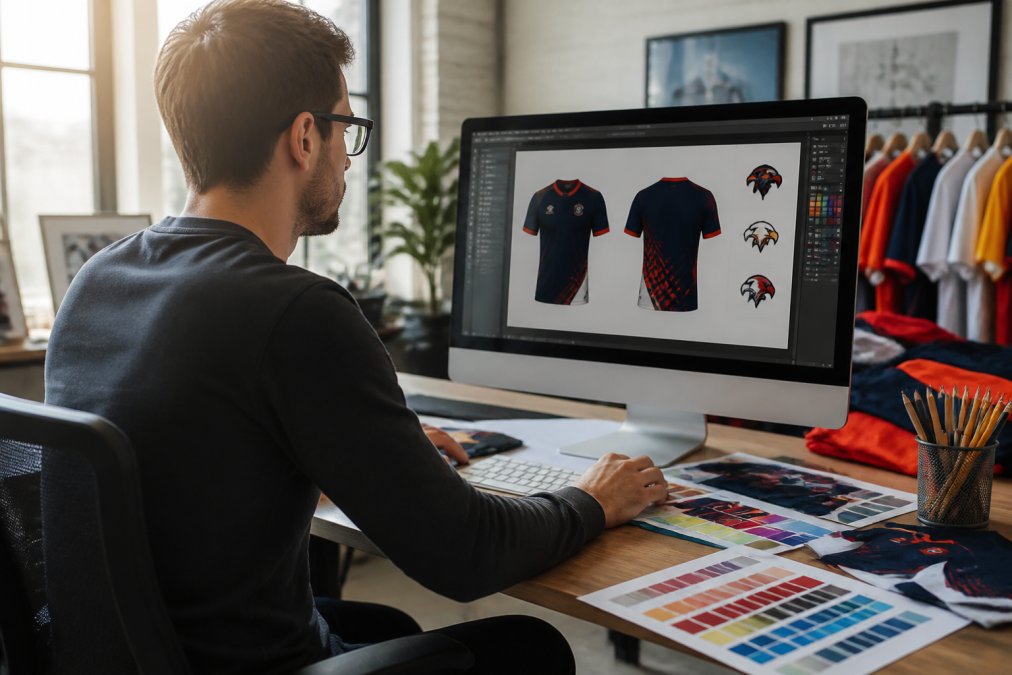
Creating effective sports image apparel requires intentional design decisions that balance aesthetics, readability, and technical production requirements. A striking design on screen becomes difficult to produce or looks muddled on the finished jersey without proper planning.
Design File Requirements and Vector Graphics
Vector graphics are non-negotiable for professional sports image apparel production. Vector files use mathematical equations to define shapes rather than pixels, which means they scale infinitely without losing quality. A vector logo remains crisp whether it’s printed at 1 inch or 12 inches, raster images like JPGs or PNGs become pixelated and blurry when enlarged, creating unusable artwork for embroidery or screen printing.
Most production facilities require designs in Adobe Illustrator format or similar vector software. If your team logo exists only as a low-resolution image or photo, it needs to be redrawn as vector artwork before production begins. This digitizing process adds cost and timeline, so starting with proper vector files accelerates your project. When submitting sports image apparel designs, confirm with your vendor exactly which file formats they accept and whether they offer design file cleanup or revision services.
Color choice dramatically impacts how your design translates to finished sports image apparel. Screen printing and embroidery both have color limitations compared to digital design. Extremely dark colors can appear muddy, while very light colors may require white underbase layers that increase complexity. Pantone color matching ensures consistency across production runs, preventing the frustration of receiving jerseys where colors don’t match your original vision.
Logo Placement and Color Optimization
Strategic logo placement creates visual impact while respecting the technical constraints of apparel production. Front chest placement remains standard for team identity, but secondary logos on sleeves, back shoulders, or pants add visual interest without overwhelming the design. The key is ensuring adequate spacing, logos placed too close to seams or edges become distorted during production.
Sizing your logo correctly prevents common production issues. A logo that’s too small becomes difficult to see and may lose detail during embroidery or screen printing. Oversized logos can look unbalanced and limit placement options. Most vendors recommend chest logos between 3-5 inches wide for jerseys, allowing visibility without dominating the garment. Sleeve logos work best at 2-3 inches, and back logos can be larger since they’re viewed from further away.
Color contrast between logo and base fabric determines readability. A dark blue logo on dark navy fabric disappears; the same logo on white or light gray fabric pops. If your team colors don’t provide natural contrast, consider adding a border or drop shadow to your logo, this simple adjustment makes designs work across multiple fabric color options. When designing sports image apparel, test your logo mock-ups against the actual fabric color you’ve selected to catch contrast problems before production begins.
Turnaround Time for Custom Sports Gear
Timeline pressure often forces difficult choices when ordering sports image apparel. Understanding realistic turnaround expectations prevents last-minute panic and helps you plan team equipment purchases strategically.
Standard production timelines vary by method. Screen printing typically requires 10-15 business days from design approval to shipment, assuming straightforward designs and adequate order volume. Embroidery usually takes 15-20 business days due to the digitizing process and machine production time. These estimates assume your artwork is finalized and approved, revisions, design corrections, or file format issues extend timelines significantly.
Rush services exist but come with premium costs and limitations. Many vendors offer expedited production for an additional fee, potentially reducing timeline by 3-5 business days. However, rush orders may not be available for all services or during peak seasons. Planning ahead remains your best strategy for managing timelines without paying rush premiums.
Shipping time adds to your overall timeline. Even expedited production doesn’t help if your finished sports image apparel sits in shipping for a week. Factor in 3-5 business days for standard ground shipping when calculating when gear will arrive. Understanding these cumulative timelines helps you avoid the common mistake of blaming production delays when the actual bottleneck was unrealistic expectations about how quickly custom apparel can be completed.
Building Team Identity Through Branded Merchandise
Sports image apparel extends beyond uniforms into the broader category of branded merchandise that reinforces team identity. Hats, jackets, warm-up gear, and spirit wear all serve as extensions of your core team branding.
Consistent branding across all merchandise items creates stronger visual identity than isolated uniform designs. When your team logo, colors, and design elements appear consistently on jerseys, caps, jackets, and warm-up gear, supporters instantly recognize your team. This visual consistency matters for youth leagues building community recognition, travel teams attracting new families, and corporate teams projecting professional identity.
Merchandise beyond uniforms also serves practical functions. Warm-up jackets protect athletes during pre-game routines while displaying team identity. Team caps and beanies become affordable spirit wear that supporters purchase to show affiliation. Promotional merchandise like water bottles or gym bags extends your team’s reach beyond active participants to families and community members. Strategic use of sports image apparel and branded merchandise creates multiple touchpoints for reinforcing team identity throughout the season.
Common Mistakes to Avoid When Ordering Custom Apparel
Learning from others’ mistakes accelerates your path to successful sports image apparel. Several predictable errors derail even well-intentioned orders.
Submitting low-quality artwork remains the most common mistake. A pixelated logo file, a photo of a logo printed on paper, or a hand-drawn design scanned at low resolution all create production problems. Vendors can sometimes fix these issues, but cleanup adds cost and timeline. Starting with proper vector files or working with your vendor’s design team prevents this entirely.
Frequently Asked Questions
What is considered sports image apparel?
Sports image apparel refers to custom-designed clothing featuring team logos, player names, numbers, or branded graphics. This includes jerseys, practice wear, warm-up gear, and fan merchandise decorated through screen printing or embroidery. The ‘image’ aspect emphasizes the visual branding and customization that creates team identity and professional appearance.
What is the difference between screen printing and embroidery for team apparel?
Screen printing applies ink directly to fabric through stenciled screens, offering vibrant colors and cost-effective bulk production. Embroidery stitches thread into fabric for a raised, textured finish that’s extremely durable and premium-looking. Screen printing works best for detailed graphics and large orders; embroidery suits logos and smaller runs where durability and aesthetics justify higher per-unit costs.
How do I choose the best material for custom sports uniforms?
Select fabrics based on activity level and climate. Moisture-wicking synthetics like polyester blends keep athletes dry during intense play. Check thread count for durability, higher counts resist wear better. For cooler weather, consider blended fabrics combining cotton comfort with synthetic performance. Always verify the fabric can withstand repeated washing and the printing or embroidery method you’ve chosen without degradation.
Can you handle small orders, or do you have high minimums?
Many custom apparel providers require minimum orders. Minimums vary by printing method and complexity. Contact your provider directly about their policies on orders of 15-20 pieces.