Table of Contents
- Step 1: Create a Custom Team Uniform Order Form Template
- Step 2: How to Collect Jersey Sizes for a Team
- Step 3: Set Up a Team Uniform Payment Tracking Spreadsheet
- Step 4: Choose Your Decoration Method and Design Specifications
- Step 5: Establish Managing Team Gear Deadlines and Production Timelines
- Step 6: Build an Online Team Store for Distributed Orders
- Common Mistakes When Managing Team Jersey Orders
- Frequently Asked Questions
Last Updated: September 19, 2026
Step 1: Create a Custom Team Uniform Order Form Template
A well-designed template helps you manage team jersey orders by preventing confusion, reducing back-and-forth emails, and ensuring consistent details from all team members.
Your form should ask for: player name, jersey size, preferred colors, personalization details (numbers or names), and a submission deadline. Teams that skip this step waste time chasing missing information later.
What to include in your form:
- Player name and contact information
- Jersey size preference with reference to a sizing chart
- Color choices (list specific options, not vague descriptions)
- Personalization requests (name, number, special text)
- Submission deadline with clear consequences for late entries
- Confirmation checkbox that player has reviewed sizing guidelines
Use digital forms like Google Forms or spreadsheet templates that auto-populate responses into organized columns, keeping all data in one place.
Add a note on your form reminding people that sizes are final after submission. This prevents the mid-season “I need a different size” requests that derail timelines and create inventory headaches.
Step 2: How to Collect Jersey Sizes for a Team
Accurate sizing is essential. Provide a detailed sizing chart and require people to measure themselves against it rather than guessing their size.
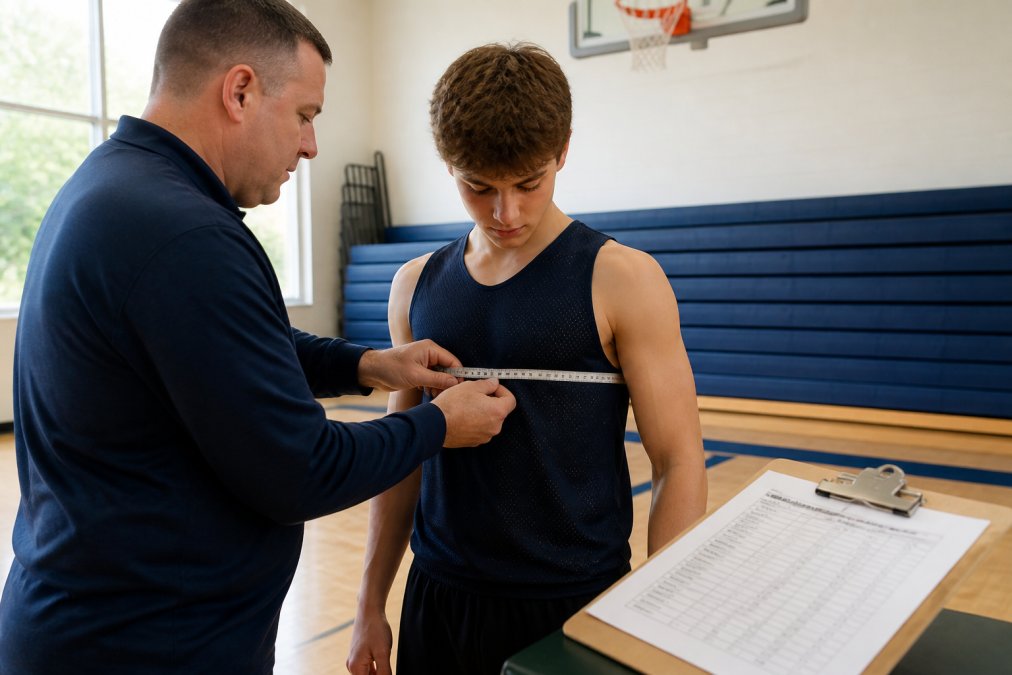
Most sizing mistakes occur because people confuse regular shirt sizes with athletic wear sizing. Your sizing chart must be specific to the exact jersey you’re ordering, as sublimation and screen-printed jerseys fit differently.
Steps to collect accurate sizes:
- Create a sizing reference guide that shows chest width, sleeve length, and overall length for each size
- Include a photo showing how to measure properly (chest across the widest point, length from shoulder to hem)
- Ask people to compare their measurements to your chart, not guess their size
- Require confirmation that they’ve checked the sizing chart before submitting
- Set a hard deadline and communicate the consequences of missing it
Request sample jerseys from your vendor if available. This small upfront cost eliminates sizing disputes later.
Never assume that XXL in one brand equals XXL in another. If you’re switching vendors, verify sizing specs match your previous orders, or you’ll end up with jerseys that don’t fit your returning team members.
Step 3: Set Up a Team Uniform Payment Tracking Spreadsheet
A team uniform payment tracking spreadsheet keeps finances organized and prevents confusion about who paid and what they owe. You also need a clear policy for disputes, partial payments, refunds, and withdrawals.
Your spreadsheet should list each team member, cost per jersey, amount paid, balance owed, payment date, and payment method for a clear record.
Essential columns for your payment tracker:
- Player name
- Jersey size ordered
- Unit cost
- Total amount due
- Amount paid to date
- Balance remaining
- Payment date(s)
- Payment method (cash, Venmo, check, etc.)
- Notes (partial payment, pending, disputed, refund issued, etc.)
- Payment status (paid in full, pending, overdue, cancelled)
Set a clear payment deadline at least one week before placing your order, since most vendors require upfront payment or a deposit before production starts.
Create a written payment policy upfront covering:
- Refund eligibility: Decide whether refunds are available if someone withdraws before artwork is submitted to the vendor. Most vendors charge non-refundable design fees once work begins, so make this clear. If a jersey arrives and doesn’t fit, clarify whether the team or individual absorbs the cost of a replacement or exchange.
- Partial payment terms: If someone can only pay half upfront, decide whether you’ll accept installment payments and set specific due dates for the remainder. Document this in writing so there’s no confusion later.
- Late payment consequences: Decide what happens if someone misses the payment deadline. Will you order their jersey separately at a higher cost? Will they be excluded from the group order? Communicate this clearly so people take the deadline seriously.
- Disputed payments: If someone claims they paid but you have no record, establish a process for resolution. Ask for proof (receipt, transaction ID, witness). If proof is provided, update your records. If not, require payment again before the order is placed.
- Cancellations and withdrawals: If someone wants to drop out after payment, decide whether they forfeit their money or receive a refund. This depends on your vendor’s cancellation policy and when the request comes in.
Handle payment disputes professionally:
If someone claims they paid but your records show no payment: (1) Check your payment method records to verify; (2) Ask for proof (receipt, transaction ID, screenshot); (3) If proof matches, update your records immediately; (4) If no proof, require resubmission or additional evidence; (5) Document the exchange in your notes column.
Use conditional formatting in your spreadsheet to highlight unpaid balances in red and overdue payments in orange. This makes it instantly obvious who still owes money and keeps you from accidentally ordering jerseys for people who haven’t paid yet. Add a separate column for “payment status” (paid in full, pending, overdue, cancelled) so you can filter and sort quickly.
Know your vendor’s payment and cancellation policies:
Before collecting money, ask your vendor: Do they require full payment upfront or accept deposits? What’s their cancellation policy? Do they replace damaged jerseys? Do they offer refunds before or after production? Can you modify order size after placement, and what are the fees? This information shapes your payment policy.
Use secure digital payment methods like Venmo, PayPal, or Square that create transaction records. Mark payments as “goods and services” for buyer protection. Keep all records for at least one year.
Step 4: Choose Your Decoration Method and Design Specifications
Screen printing uses ink through a mesh screen; it’s durable for bold designs but each color requires a separate screen, raising costs for multi-color designs. Sublimation bonds dye directly into polyester fabric, producing vibrant, detailed, crack-resistant designs. Embroidery stitches thread for a raised look; it’s professional but slower and more expensive, best for logos and small designs.
Use vector graphics (Adobe Illustrator or similar) rather than raster images; they scale better and are cleaner. Ask your vendor if they can clean up pixelated files, but understand some are beyond repair.
Questions to ask your vendor:
- What file format do they prefer (AI, EPS, PDF)?
- Do they offer design assistance if your file needs work?
- What’s the minimum size your logo can be printed at?
- How many colors can you use before costs spike?
- What’s the turnaround time for each decoration method?
Step 5: Establish Managing Team Gear Deadlines and Production Timelines
Custom team jerseys typically take time for production, longer during peak seasons. Work backward from your season start date: if your season starts in 8 weeks and production takes 2 weeks, place your order 6 weeks out. Build in buffer time for delays.
Set intermediate deadlines and send reminder emails one week before each deadline to catch procrastinators.
Never tell your team “we’ll order whenever everyone gets their stuff in.” That’s a recipe for orders dragging on for months. Set a hard deadline and stick to it, even if one or two people miss it. Late orders can be handled separately if absolutely necessary.
Step 6: Build an Online Team Store for Distributed Orders
An online team store lets each person order and pay individually on their own timeline through third-party platforms that handle design, payment, and fulfillment. This works well for distributed teams and those with mid-season additions, removing the burden of collecting money and chasing payments.
Common Mistakes When Managing Team Jersey Orders
Underestimating timeline pressure when you manage team jersey orders causes teams to rush vendors, pay rush fees, or receive jerseys after the season starts. Collecting sizes from 20 people takes 2-3 weeks; artwork revisions take another week. Work backward from your season start date with a 2-week buffer. Use a shared calendar or project management tool to set intermediate deadlines and send reminders one week before each.
Collecting bad artwork files causes delays. Request the original file from whoever created your logo in vector format (AI, EPS, or PDF). If you only have raster images (JPG, PNG), ask your vendor if they can work with it and get a quote upfront for any cleanup or redesign work.
Not accounting for sizing variations leads to ill-fitting jerseys. Create a sizing reference guide specific to your exact jersey with measurements (chest width, sleeve length, overall length). Include a photo showing how to measure properly. Require written confirmation that people have checked the chart. Request sample jerseys if available to eliminate disputes.
Forgetting about payment deadlines leaves you short on money. Set a hard deadline and communicate it in writing. Send reminders one week before, three days before, and the day before. Don’t place the order until you have at least 90% of money committed. Handle late payments separately.
Changing designs mid-production is expensive and delays orders.
Frequently Asked Questions
What information should be included in a custom team uniform order form template?
Your custom team uniform order form template should capture player name, jersey size, preferred number, shirt style preference, and any personalization options. Include fields for contact information, delivery address, and special requests. Add a section for payment status and due date reminders. This ensures all critical details are collected upfront and reduces back-and-forth communication with your vendor or team members.
How far in advance should you manage team gear deadlines for jersey orders?
Order custom team uniforms well in advance of your season start. This timeline accounts for design approval, production time, and unexpected delays. Managing team gear deadlines early prevents last-minute stress and ensures everyone has their jerseys before competition begins.
What’s the best way to organize team uniform payments to avoid out-of-pocket costs?
Use a team uniform payment tracking spreadsheet to record who has paid, how much, and when payment is due. Collect deposits upfront to secure your order, then collect final payments before production begins. Clearly communicate payment deadlines to all team members.
How do you handle jersey sizing and personalization for a large roster?
Collect sizing information early using a standardized sizing chart from your vendor. Have team members try on sample sizes if possible to ensure accurate fits. For personalization, verify player names and numbers carefully before submitting artwork files. Use a spreadsheet to track which players requested which customization options. Double-check all details before final approval to prevent costly reprints and delays in order fulfillment.