Table of Contents
- What Makes Screen Printing Durable for Youth Sports
- Screen Printing vs Sublimation for Jerseys
- Choosing Fabrics That Hold Prints Through a Full Season
- How to Wash Screen Printed Sports Uniforms
- Preventing Screen Print Cracking on Jerseys
- Eco-Friendly Ink Standards and Safe Options for Youth Gear
- Budget-Friendly Design Tips for Small Youth Leagues
- Conclusion
- Frequently Asked Questions
Last Updated: September 17, 2026
What Makes Screen Printing Durable for Youth Sports
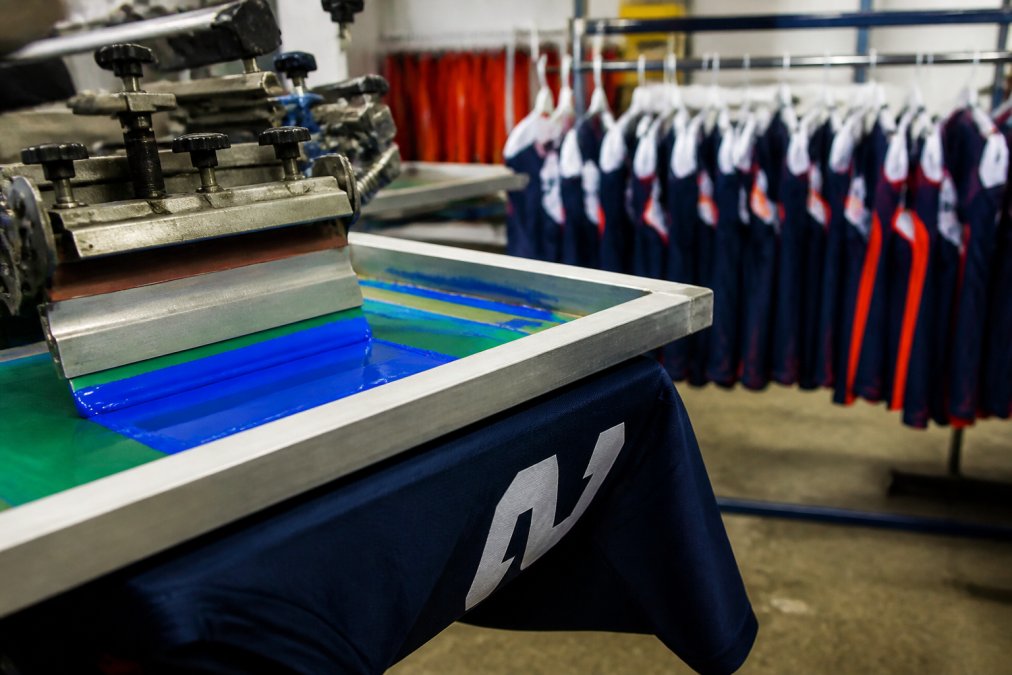
- Plastisol ink sits on top of the fabric and cures at roughly 320°F. It’s the workhorse for cotton and cotton-blend tees, holding color across dozens of wash cycles.
- Water-based and discharge inks soak into the fabric, producing a softer feel that works well for performance fabric.
Ask any printer how they verify cure. The right answer involves a temperature probe or a wash-durability test on a sample, not a visual check. If they can’t answer, that’s your signal.
Screen Printing vs Sublimation for Jerseys
Screen printing wins for cotton and cotton-blend uniforms, small-batch orders, and thick, opaque color blocks. Sublimation wins for all-over patterns on polyester performance jerseys, because the dye becomes part of the fabric rather than sitting on top.
| Factor | Screen Printing | Sublimation |
|---|---|---|
| Best fabric | Cotton, cotton blends | Polyester, performance fabric |
| Feel | Slight raised layer | No added layer |
| Cracking risk | Yes, if under-cured | None |
| All-over designs | Limited | Excellent |
| Low minimums | Yes | Less flexible |
| Color matching | Exact spot colors | Blended, process-based |
When Sublimation Wins and When Screen Printing Wins
Sublimation is the better call when your uniform is 100% polyester, your design covers the whole jersey, and you want zero risk of a cracked logo, common in travel and club programs.
Choosing Fabrics That Hold Prints Through a Full Season
The fabric decides how well any print survives. Cotton and cotton blends bond readily with plastisol ink and are the most forgiving choice for screen printing. Polyester performance fabric is trickier, thanks to dye migration.
Polyester, Performance Fabric, and Dye Migration Risks
Preventing dye migration starts with the ink, not the fabric. Low-bleed plastisol inks can block dye from rising into the print, and a dye-blocking underlay can protect dark or heavily dyed polyester.
Skipping a dye-blocking layer on dark polyester can lead to print failures. The failure may show up weeks later, after the garments sit in a hot car or warehouse, and by then the whole order can be affected.
How to Wash Screen Printed Sports Uniforms
Wash screen printed uniforms inside out in cold water on a gentle cycle, then tumble dry on low or hang to dry. Heat is the enemy of wash-fastness, hot water and high dryer settings shorten a print’s life most.
Washing and Drying Steps That Protect Ink Bonding
A consistent routine protects ink bonding better than any single product. Recommended steps include:
- Turn the garment inside out before washing
- Use cold water on a gentle or delicate cycle
- Skip bleach and fabric softener, which degrade the ink layer
- Wash printed items separately from abrasive items like towels or jeans
- Tumble dry on low, or hang to dry when time allows
- Avoid ironing directly on the print
Preventing Screen Print Cracking on Jerseys
Preventing screen print cracking on jerseys starts at the press, not the laundry room. An under-cured print cracks no matter how carefully it’s washed; a properly cured print on the right fabric survives a full season.
Common causes of cracking include:
- Under-curing. The ink never fully bonds, so it flakes and cracks from the first wash.
- Wrong ink for the fabric. Standard plastisol on a stretchy performance jersey cracks as the garment flexes.
- Excessive heat in drying. High dryer settings embrittle the ink over time.
Common Print Failures and How to Troubleshoot Them
| Problem | Likely Cause | Fix |
|---|---|---|
| Cracking and peeling | Under-cured ink | Verify cure with a temperature probe |
| Pink or muddy logo | Dye migration | Use low-bleed ink plus dye blocker |
| Faded color | Over-washing in hot water | Switch to cold wash, low dry |
| Stiff, heavy print | Too much ink deposit | Reduce ink laydown, use softer ink |
| Cracks only at seams | Fabric stretch | Use stretch-additive ink |
A wash-durability test on a sample before the full run can help identify potential issues.
Eco-Friendly Ink Standards and Safe Options for Youth Gear
Water-based and non-toxic inks are the safer choice for youth gear, and they’ve improved enough that softness and durability no longer suffer. Parents often ask what’s touching their kids’ skin, a fair question. But “non-toxic” is a marketing word until you know which standard it refers to and what the printer can document.
What “Safe Ink” Actually Means Under Federal Rules
Children’s apparel in the U.S. is regulated as a consumer product, so the safety bar is set by specific rules rather than one blanket certification:
- CPSIA lead and phthalate limits. The Consumer Product Safety Improvement Act caps lead content in children’s products and bans certain phthalates in items designed for kids (The Consumer Product Safety Improvement Act (CPSIA)). Screen-printed ink sits on the surface of a garment, so it can fall inside that scope.
- CPSIA tracking labels. Children’s apparel must carry a permanent tracking label with the manufacturer, production date, and location (Tracking Label Business Guidance). If a print shop decorates garments for a youth league, the decorated item still needs to trace back to a responsible party.
- CPSIA third-party testing. Children’s products are subject to periodic third-party testing by CPSC-accepted labs. A printer who decorates youth apparel should be able to provide information on the inks they use and whether those inks carry the underlying test documentation from the ink manufacturer.
- State-level chemical rules. Some states layer additional restrictions on top of the federal floor, so a league ordering across state lines may need to ask the printer to confirm the ink system meets the strictest jurisdiction in the order.
Water-Based vs. Plastisol: The Mechanism Behind the Safety Claim
The safety difference between ink families comes down to what carries the pigment and what remains after curing.
- Water-based inks use water as the carrier. During curing, the water flashes off and the binder crosslinks into the fabric. With no petroleum solvent to drive off, VOC emissions are lower and the finished print has little residual chemistry on the surface.
- Plastisol inks are 100% solids, PVC resin suspended in plasticizer, with no solvent to evaporate. Fully cured, the plasticizer locks into the film, which is why cured plastisol is generally considered safe for wear. The catch is fully: under-cured plastisol leaves unreacted plasticizer in the print, the same under-cure that causes cracking.
- Discharge inks remove dye from the garment rather than adding a layer, giving a very soft hand but involving a chemical reaction with the fabric dye. They’re typically a poor fit for youth gear on dark polyester because of that chemistry and the dye-migration risk.
“Non-toxic” on a printer’s website is not documentation. Ask for the ink manufacturer’s safety data sheet and, for youth orders, the CPSIA test report or a statement of compliance. A printer who cannot produce either may be asking you to take the claim on faith.
Questions to Ask Before You Approve the Ink
A league safety checklist could include:
- Which ink system will be used on this order, water-based, plastisol, or discharge?
- Can you provide the ink manufacturer’s safety data sheet?
- For youth sizes, can you provide CPSIA compliance documentation or a statement of conformity?
- Does the ink meet the strictest state chemical rule in our order footprint?
- Will the garments carry the required tracking label after decoration?
For youth gear, ask three questions: which ink system, what documentation, and does it meet CPSIA. A printer who can answer all three has likely considered these aspects, and one who cannot may present a liability on a league order.
Budget-Friendly Design Tips for Small Youth Leagues
Small leagues can keep costs down without sacrificing print durability by simplifying the design, not the ink. Every additional color adds a screen, a setup step, and a registration pass on press. Fewer colors means lower cost with no loss of quality, and often a sharper-looking logo.
Where the Money Actually Goes
Screen printing pricing is driven by three cost buckets, only one of which scales with quantity:
- Setup and screen charges. Each color in the design needs its own screen, and each screen carries a one-time setup cost. A one-color design has one setup; a four-color design has four. On a small run, setup can be the single largest line item.
- Per-piece printing cost. This is the ink, labor, and press time per garment. It drops as quantity rises because setup is spread across more units.
- Garment cost. The blank itself is often the biggest per-piece number, and it’s the one leagues most often overlook when they fixate on the print.
Design Moves That Cut Cost Without Cutting Quality
- Limit colors to one or two. A bold single-color logo can often look sharper than a busy multi-color one, and it removes an entire screen and setup step.
- Use the garment color as a design element. A white print on a navy jersey reads as two colors for the price of one. This can be a highly effective move for a small league.
- Standardize across age groups. Ordering the same design for U8 through U14 in one run spreads setup across every piece and drops the per-unit cost.
- Skip the front and back print if budget is tight. A clean chest logo alone looks professional, and it removes a second print location and its setup.
- Avoid gradients and fine halftones. They force process printing, which multiplies screens and registration complexity.
- Plan ahead. Rush timelines cost more because the shop has to reshuffle its press schedule. Six weeks of lead time can be safer than three.
- Choose the garment before the design. A mid-weight cotton-blend tee holds plastisol well and costs less than a performance polyester jersey that may need low-bleed ink and a dye blocker.
A Simple Cost-Comparison Framework
| Decision | Cost impact | Durability impact |
|---|---|---|
| Drop from 3 colors to 1 | Removes two screens and two setups | None, fewer colors can often print more cleanly |
| Print on garment color instead of adding a base | Removes a screen and a print pass | None, and reduces ink laydown |
| Move from performance polyester to cotton blend | Lowers garment cost | Improves ink bond and removes dye-migration risk |
| Combine age groups into one order | Spreads setup across more pieces | None |
| Add a second print location | Adds a screen and a setup | Adds a second failure point for cracking |
Ask your printer for a quote at two color counts on the same garment. Seeing the setup line item move can be a fast way to understand where your budget is actually going.
Conclusion
The gap between a print that survives a season and one that cracks by week three comes down to ink chemistry, curing, and fabric compatibility, not luck. Get those three right and your team branding holds up through every wash and every game.
Frequently Asked Questions
How long does screen printing last on sports jerseys?
A properly cured screen print on a compatible fabric can hold up for many wash cycles when cared for correctly. The ink bonds to the fabric surface and stays flexible if you wash inside out in cold water and skip the dryer. Longevity depends on ink type, curing temperature, and how the uniform is washed between games.
Is screen printing better than sublimation for youth sports?
It depends on the fabric and the design. Screen printing lays ink on top of the garment, which gives bold, opaque colors on dark jerseys and works on cotton, polyester, and blends. Sublimation dyes the fabric itself, so it never cracks or peels, but it only works on light-colored polyester and cannot print white ink. For youth teams that need durable, high-contrast logos on a range of fabrics, screen printing is often the more versatile choice.
How do you keep screen printed jerseys from cracking?
Cracking usually comes from under-cured ink, stretching the print, or heat damage in the dryer. To prevent it, wash jerseys inside out in cold water on a gentle cycle, avoid fabric softener and bleach, and air-dry or tumble on low. Never iron directly over the print. If a print starts to crack, it can be a sign the ink was not fully cured during production, so it’s advisable to discuss the curing process with your printer before ordering.
What ink types are best for performance athletic wear?
Plastisol inks are often used for durability on cotton and cotton blends, offering thick, vibrant coverage. For polyester and moisture-wicking performance fabric, specific ink types like low-bleed plastisol or silicone-based inks can be used to address lower curing temperatures and dye migration. Water-based inks give a softer feel but can fade faster on dark fabrics. Ask your printer which ink they use for the specific fabric your team wears.