Table of Contents
- Why Fabric Choice Matters for Youth Sports Uniforms
- Polyester vs Cotton Sports Uniforms: Performance and Durability
- Breathable Mesh Sports Uniform Fabric: Ventilation and Heat Management
- Polyester-Spandex Athletic Fabric: Stretch, Flexibility, and Range of Motion
- Durability Testing and Fabric Weight for Long-Lasting Uniforms
- How to Wash Sports Uniforms to Extend Garment Lifespan
- Fabric Selection by Sport, Climate, and Playing Conditions
- Youth-Specific Safety and Comfort Considerations
- Frequently Asked Questions
Last Updated: October 12, 2026
Why Fabric Choice Matters for Youth Sports Uniforms
Selecting the right fabric for youth sports uniforms affects performance, durability, comfort, and cost over an entire season. Young athletes demand fabrics that can withstand intense activity, frequent washing, and the wear patterns unique to growing bodies. At Piercy Sports and Apparel, we understand that a uniform that fails mid-season damages team morale and creates unexpected expenses for families and organizations.
The fabric you choose determines how well a uniform performs across three critical dimensions: how it handles sweat and heat, how long it lasts through repeated use, and whether young athletes can move freely without restriction. A uniform that looks sharp on day one but falls apart after ten games costs more in the long run than one engineered for durability from the start.
Polyester vs Cotton Sports Uniforms: Performance and Durability
The choice between polyester and cotton defines most uniform decisions. Each fabric brings distinct advantages and trade-offs that matter differently depending on your sport, climate, and budget.
Polyester Properties and Moisture-Wicking
Polyester dominates modern sports uniforms because it excels at moisture management. Unlike cotton, which absorbs sweat and holds moisture against the skin, polyester fibers are hydrophobic, they repel water rather than absorb it.
Polyester also resists shape retention issues that plague cotton uniforms. After repeated washing and wearing, cotton fibers relax and lose their original fit.
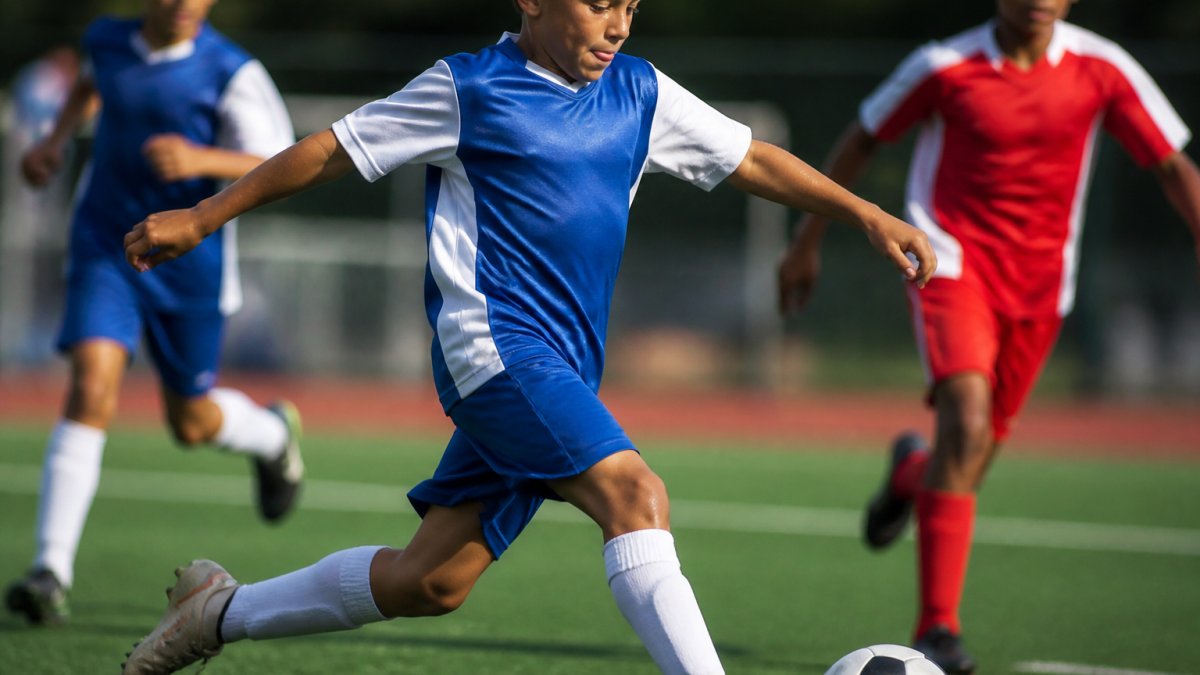
Performance fabrics blended with polyester, particularly polyester-spandex combinations, add stretch and flexibility without sacrificing durability. These blends allow young athletes full range of motion while keeping the uniform stable during movement.
Cotton Comfort and Breathability Trade-offs
Cotton uniforms offer genuine comfort advantages in specific situations. The fiber is soft against the skin, breathes naturally, and feels familiar to young athletes accustomed to everyday cotton clothing. For low-intensity activities or cooler climates where moisture management is less critical, cotton’s breathability and softness can outweigh durability concerns.
However, cotton’s weaknesses compound in youth sports environments. Cotton absorbs moisture rapidly, which adds weight and reduces breathability once saturated, the opposite of what you want during intense activity. Cotton fibers also weaken when wet, making wet cotton uniforms more prone to tearing during play.
Many teams compromise with poly-cotton blends that combine cotton’s softness with polyester’s durability and moisture-wicking. These blends typically run 65% polyester and 35% cotton, offering a middle ground that improves comfort while maintaining the performance characteristics young athletes need.
Breathable Mesh Sports Uniform Fabric: Ventilation and Heat Management
Mesh fabrics solve a specific problem: how to maximize airflow while maintaining structure and durability. Mesh construction uses an open weave pattern that allows air to circulate freely, making it ideal for high-heat sports or warm climates where moisture management and ventilation are equally important.
Mesh fabrics typically combine polyester or nylon with strategic open areas that create channels for air movement. This construction keeps young athletes cooler by allowing sweat to evaporate more quickly than solid-weave fabrics permit.
The trade-off is durability. Mesh’s open weave is more vulnerable to snagging, tearing, and abrasion than solid-weave fabrics. Teams using mesh uniforms often see higher replacement rates, particularly in contact sports where athletes collide or slide.
Polyester-Spandex Athletic Fabric: Stretch, Flexibility, and Range of Motion
Polyester-spandex blends represent the performance standard for modern youth sports uniforms. Spandex (also called elastane) comprises only 5-20% of the blend but transforms how the uniform moves with the athlete’s body. This combination allows full range of motion without restriction while maintaining the durability and moisture-wicking properties polyester provides.
Young athletes benefit directly from the stretch and flexibility that spandex adds. A uniform that moves with the body rather than against it reduces fatigue, improves agility, and prevents the binding sensation that restricts movement during competitive play.
The performance advantage of polyester-spandex is measurable but comes at slightly higher cost than pure polyester. For competitive youth leagues where performance matters, the investment typically pays back through reduced uniform replacement and improved athlete comfort. For recreational leagues with tighter budgets, pure polyester offers acceptable performance at lower cost.
Durability Testing and Fabric Weight for Long-Lasting Uniforms
Durability in youth sports uniforms depends on two measurable factors: fabric weight and construction quality. Fabric weight, measured in ounces per square yard, directly correlates with how long a uniform survives repeated use and washing.
Tear Resistance and Abrasion Durability
Lightweight fabrics (under 4 ounces per square yard) are common in budget uniforms but sacrifice durability. These thin fabrics tear more easily during contact, wear through faster in high-friction areas like seat and shoulders, and show pilling after just a few wash cycles.
Mid-weight fabrics (4-5 ounces per square yard) provide the practical durability most youth teams need. This weight range resists tearing and abrasion while remaining lightweight enough for comfortable movement and breathability. Mid-weight polyester and polyester-spandex blends hold up through 50+ wash cycles without significant degradation.
Heavy-weight fabrics (5.5+ ounces per square yard) offer maximum durability but add noticeable weight and can reduce breathability. These are practical for football and rugby uniforms where impact protection matters, but less necessary for baseball, soccer, or basketball.
Shape Retention and Repeated Washing
How a uniform responds to repeated washing determines its practical lifespan. Polyester and polyester-blend uniforms maintain shape through dozens of wash cycles because the fibers don’t relax or stretch like cotton. After 30 washes, a quality polyester uniform should look nearly identical to how it appeared on day one.
Cotton and cotton-blend uniforms show measurable shape loss after 10-15 wash cycles. The neckline stretches, sleeves lengthen, and the overall fit becomes loose and inconsistent. This degradation matters for youth teams because it forces replacement before the fabric itself has worn through.
Spandex content improves shape retention even further. Polyester-spandex blends recover their original form after stretching, which means a uniform worn by a taller athlete one season can fit a smaller athlete the next season without permanent distortion.
How to Wash Sports Uniforms to Extend Garment Lifespan
Proper care extends uniform lifespan significantly. Most premature uniform failure comes from incorrect washing rather than actual fabric breakdown.
Wash uniforms in cold water with mild detergent. Hot water breaks down polyester and spandex fibers faster and sets sweat stains permanently. Cold water preserves color and fiber integrity through repeated cycles.
Turn uniforms inside out before washing. This reduces pilling on the visible surface and protects printed or embroidered logos from abrasion against other garments.
Air dry whenever possible. Machine drying generates heat that degrades polyester and spandex, shortens fiber lifespan, and can damage printed graphics or embroidery.
Avoid bleach and fabric softeners. Bleach weakens synthetic fibers and causes permanent discoloration in team colors. Fabric softeners coat fibers and reduce breathability and moisture-wicking performance. Neither is necessary for clean uniforms and both accelerate degradation.
| Washing Practice | Impact on Lifespan | Recommendation |
|---|---|---|
| Cold water washing | Extends life 20-30% | Always use cold water |
| Gentle cycle | Reduces fiber stress | Use delicate setting |
| Air drying | Extends life 30-50% | Air dry whenever possible |
| Inside-out washing | Protects graphics | Turn inside out before washing |
| Avoid bleach/softeners | Preserves fiber integrity | Never use either product |
Fabric Selection by Sport, Climate, and Playing Conditions
The ideal fabric varies by sport and environment. Baseball and softball uniforms prioritize breathability and comfort because athletes spend significant time stationary or moving slowly. Polyester mesh or lightweight polyester-spandex blends work well.
Climate matters significantly. In warm, humid environments, mesh fabrics or polyester with high breathability reduce heat stress. In cool climates, solid-weave polyester provides adequate moisture management without sacrificing insulation. In variable climates, polyester-spandex blends offer flexibility across temperature ranges.
Playing surface affects durability needs. Grass sports like football and soccer see concentrated wear on the seat and knees from sliding and diving. Synthetic surfaces (artificial turf) create more abrasion and require heavier-weight fabrics. Indoor sports like basketball need less weather protection but more flexibility for quick movement.
Youth-Specific Safety and Comfort Considerations
Young athletes have specific needs that differ from adult performers. Growing bodies mean uniforms must accommodate size changes within a season.
Seam quality matters more for youth uniforms than adult versions. Young athletes move with less control and more intensity than adults, creating higher stress on seams.
Skin sensitivity is another consideration. Young athletes often have more sensitive skin than adults, making soft, breathable fabrics important. Polyester-cotton blends and polyester-spandex with quality finishing reduce irritation and chafing during extended wear.
Color retention matters for team identity. Youth uniforms take significant abuse through sweat, grass stains, and repeated washing. Quality dyes and fabric finishing preserve color through the season.
Choosing the right fabric for durable youth sports uniforms requires balancing performance, durability, comfort, and budget.
Frequently Asked Questions
What is the most durable fabric for youth sports uniforms?
Polyester and polyester-blend fabrics offer superior durability for youth sports uniforms. Polyester resists tearing, maintains shape after repeated washing, and withstands high-impact activity better than pure cotton. A polyester-spandex blend (typically 88% polyester, 12% spandex) combines durability with stretch for mobility. For maximum longevity, look for heavier fabric weight (around 5-6 ounces per square yard) and tight, consistent construction that resists abrasion during athletic movement.
Is polyester or cotton better for sports uniforms?
Polyester outperforms cotton for sports uniforms in durability, moisture management, and shape retention. Polyester wicks sweat away from skin, dries quickly, and resists color fading and staining. Cotton feels softer initially but absorbs moisture, dries slowly, and stretches out over time. Many teams choose poly-cotton blends (60% polyester, 40% cotton) as a compromise, gaining polyester’s durability while retaining some cotton softness. For competitive or high-wear youth sports, pure polyester or polyester-spandex blends deliver better performance and longer garment lifespan.
How should you wash sports uniforms to make them last longer?
Wash uniforms in cold water (not hot) with mild detergent, and turn them inside out to protect printed or embroidered designs. Avoid bleach and fabric softeners, which weaken fibers and damage design durability. Air-dry or use low heat; high heat shrinks polyester blends and degrades elasticity. Wash after every use to prevent sweat buildup and staining. For embroidered or screen-printed uniforms, wash separately from rough fabrics to prevent snagging. Proper care extends uniform lifespan by 50% or more and keeps colors vibrant through many seasons.
What fabric weight should youth sports uniforms have?
Youth sports uniforms should use fabric weight between 5 and 6 ounces per square yard for optimal durability and comfort. This weight provides enough substance to resist tearing and abrasion during high-impact activity, while remaining lightweight enough for breathability and movement. Heavier fabrics (7+ ounces) feel durable but trap heat; lighter fabrics (under 4 ounces) breathe well but wear out faster. Check the fabric specification when ordering; reputable suppliers list weight, fiber content, and construction details to help you assess expected lifespan.
Are polyester-spandex blends good for youth sports uniforms?
Polyester-spandex blends are excellent for youth sports uniforms. The spandex (typically 10-15% of the blend) adds stretch and flexibility without sacrificing durability. This combination allows young athletes full range of motion in baseball, basketball, soccer, and other sports while the polyester base resists tearing, maintains shape, and wicks moisture. Spandex also improves fit retention, uniforms stay snug rather than stretching out over time. These blends cost slightly more than pure polyester but deliver superior comfort and longer garment life, making them a smart investment for travel teams and competitive leagues.
What should teams look for in fabric construction for durability?
Look for tight, consistent weave or knit construction with no loose threads or thin spots. Double-stitched seams indicate better durability than single-stitch. Fabric should feel dense and substantial without being stiff. Check that the fiber content is clearly labeled and matches the promised specification. Ask suppliers about their durability testing methods, reputable manufacturers test fabrics for tear strength, color retention after repeated washing, and resistance to pilling and abrasion. Inspect samples before committing to a large order; quality construction is visible in how the fabric feels and looks under close examination.
How do you choose uniform fabric for different youth sports?
Match fabric to the sport’s physical demands. For high-impact sports like football and lacrosse, choose heavier polyester blends with extra tear resistance. For baseball and softball, breathable mesh panels combined with durable polyester provide ventilation and durability. Soccer and basketball benefit from lightweight, stretchy polyester-spandex blends that allow maximum movement. Consider climate too: in hot, humid conditions, prioritize breathability and quick-drying polyester; in cooler seasons, slightly heavier fabrics retain warmth. Consult with your uniform supplier about sport-specific recommendations based on typical playing conditions and athlete age.