Table of Contents
- What to Look for When You Buy Custom Sports Team Uniforms
- Sublimated vs Screen Printed Uniforms: Which Is Right for Your Team?
- How to Size Team Uniforms Without Ordering Twice
- Bulk Ordering, Pricing Tiers, and Budgeting for Your Season
- Team Uniform Ordering Checklist: Everything Before You Submit
- Caring for Custom Sports Uniforms So They Last Multiple Seasons
- Why Custom Sports Team Uniforms from Piercy Sports Stand Out
- Frequently Asked Questions
Last Updated: August 31, 2026
Coaches and team managers buying custom sports team uniforms face decisions that affect team identity, player comfort, and season budget. At Piercy Sports and Apparel, we’ve worked with youth leagues, travel teams, school programs, and club organizations long enough to know where the process breaks down. This guide covers fabric selection, print technology, bulk pricing, sizing strategy, and proper care. We’ll show you how to approach each decision so you order with confidence the first time.
The biggest mistake most teams make? Treating uniform selection as purely a design exercise. Technical choices, fabric weight, decoration method, sizing range, and order timing, matter just as much as logo placement.
What to Look for When You Buy Custom Sports Team Uniforms
Choosing the right uniform starts with two questions: what sport are your players competing in, and what conditions will they face? Everything else follows from there.
Fabric Technology and Performance Features
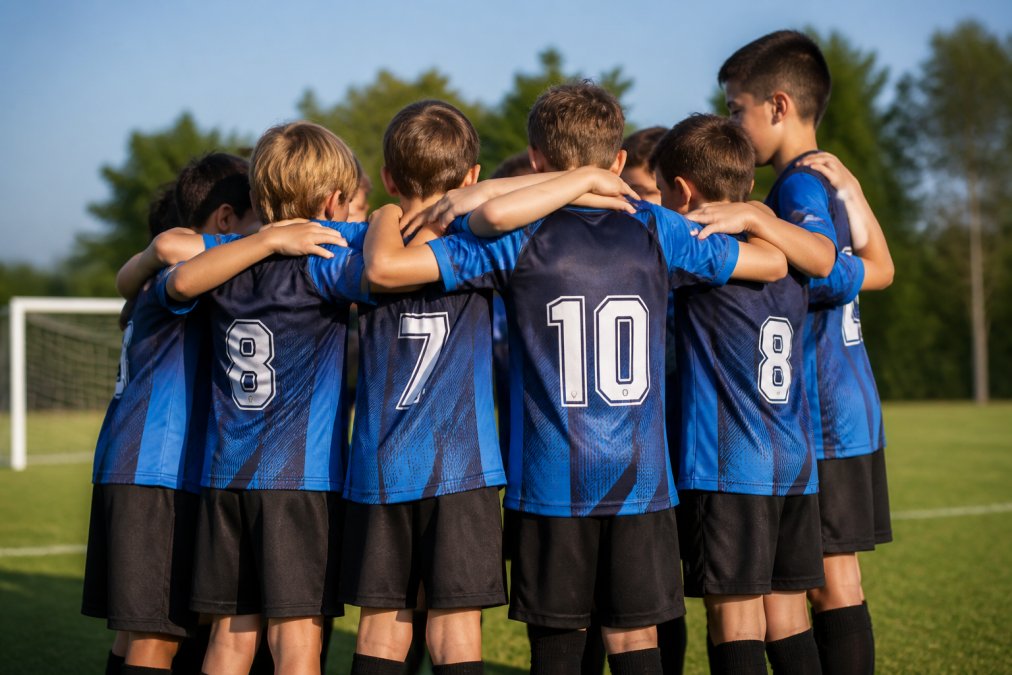
Moisture-wicking fabric is the baseline expectation for any athletic apparel today. Polyester-based performance gear pulls sweat away from the skin and dries faster than cotton, keeping players cooler and reducing chafing. For contact sports, look for reinforced seams at shoulders, underarms, and side panels. For outdoor summer sports, breathable mesh panels improve airflow significantly.
Fabric weight matters more than most buyers realize. Lighter fabrics work well for warm-weather sports like soccer and baseball. Heavier constructions hold up better for football and wrestling, where abrasion is constant. Compression fit options aid performance in basketball and track. Size inclusivity across the full roster is non-negotiable: a good supplier should offer sizing from youth small through adult 4XL without treating extended sizes as a special order.
Key fabric features to prioritize:
- Moisture-wicking polyester or poly-blend construction
- Breathable mesh panels for high-exertion sports
- Durable stitching at seams and stress points
- UV protection rating for outdoor sports
- Compression or relaxed fit depending on sport requirements
Customization Options: Logos, Names, and Numbers
Team identity lives in the details. Jersey customization typically includes custom logo placement, player names, and player numbers. High-resolution digital printing preserves fine logo detail and color gradients that lower-resolution methods lose. Premium embroidery adds professional-grade texture to chest logos and wordmarks that holds its structure wash after wash.
A reputable shop can work with vector artwork for the cleanest output. If your file is a low-resolution JPEG, ask whether the provider can redraw it as a vector before production. This prevents pixelated results on finished uniforms. Color matching to your team’s existing brand palette is another area where experienced providers add real value, they’ll confirm Pantone or CMYK equivalents before production begins.
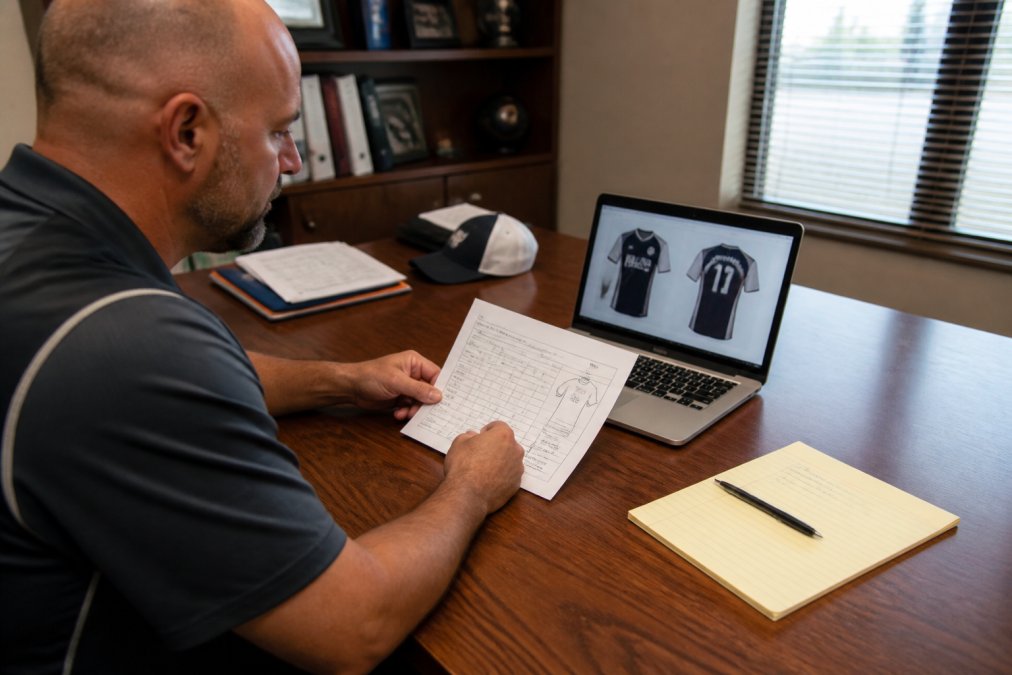
Always request a design mockup before approving production. A mockup lets you verify logo placement, number font, and color accuracy before a single garment is printed. Catching an error at the mockup stage costs nothing; catching it after production is expensive.
Sublimated vs Screen Printed Uniforms: Which Is Right for Your Team?
The decoration method you choose affects cost, design flexibility, durability, and turnaround time. This is one of the most consequential decisions in the uniform ordering process.
| Factor | Sublimation | Screen Printing |
|---|---|---|
| Design complexity | Full-color, all-over graphics | Best for 1-4 solid colors |
| Durability | Dye fused into fabric, won’t crack | Can crack or peel over time |
| Setup cost | No screens required | Setup fees per color |
| Fabric compatibility | Polyester only | Works on most fabrics |
| Best for | Travel teams, full-color branding | Budget orders, simple logos |
| Minimum quantities | Often lower | May require higher minimums |
When Sublimation Wins
Sublimated jerseys are the right call for teams that want full-color, all-over graphics with no design compromises. The sublimation process fuses dye directly into the polyester fabric at the molecular level, so the design cannot crack, peel, or fade. For club and travel teams with detailed logos, gradient colors, or complex patterns, sublimation produces professional-grade results that hold up across an entire season. There are no setup fees per color, which makes intricate multi-color designs cost-effective. The tradeoff is that sublimation only works on polyester or high-polyester-blend fabrics.
When Screen Printing Makes More Sense
Screen printing is a cost-effective method for teams with simple, solid-color logos and a tighter budget. If your design uses one to three colors and doesn’t require edge-to-edge coverage, screen printing delivers clean, sharp results at a lower per-unit cost on higher-quantity orders. The limitation is longevity: screen-printed designs can crack or peel after repeated washing, particularly if care instructions aren’t followed. According to Impressions Magazine’s guide to garment decoration methods, the choice between sublimation and screen printing often comes down to design complexity and expected garment lifespan.
How to Size Team Uniforms Without Ordering Twice
Sizing errors are the most common and most avoidable problem in team uniform orders. Ordering twice costs money and blows your delivery timeline.
Collect actual body measurements from every player, not just ask them what size they wear. Athletes frequently wear different sizes in performance gear than in everyday clothing. Collect chest circumference, waist, and hip measurements for bottoms; chest and shoulder width for tops. Cross-reference those measurements against the specific size chart for the garment you’re ordering, size charts vary between manufacturers.
Practical steps to avoid re-orders:
- Distribute a measurement form to players and parents at least three weeks before your order deadline
- Have athletes measure in athletic clothing, not street clothes
- For youth players, size up by one if measurements fall between sizes
- For compression garments, follow the manufacturer’s size chart strictly
- Add 5-10% overage to your order for rosters that change mid-season
- Confirm with your supplier whether individual player personalization can be added to replacement pieces without a full reorder
As documented in the American Apparel & Footwear Association’s sizing standards resource, standardized sizing across the industry remains inconsistent, which is exactly why supplier-specific size charts matter more than generic assumptions.
Bulk Ordering, Pricing Tiers, and Budgeting for Your Season
Bulk team orders almost always unlock better pricing per unit. Wholesale pricing typically activates at quantity thresholds, commonly around 12, 24, or 48 units, though exact minimums depend on the provider and decoration method.
For budget planning, the variables that affect total cost include:
- Quantity: More units generally means lower cost per piece
- Decoration method: Sublimation pricing differs from screen printing
- Number of decoration locations: Front chest, back name, back number, and sleeve logos each add cost
- Garment quality tier: Performance-grade polyester costs more than basic stock uniforms
- Turnaround time: Rush production typically carries a premium
- Shipping: Bulk orders ship heavier; factor freight cost into your per-unit budget
For teams working with tight budgets, fundraising campaigns that offset uniform costs, splitting orders between core uniforms and optional add-ons like warm-up jackets, and phasing purchases across seasons help. Piercy Sports and Apparel offers tailored solutions to match exact client needs. For current pricing, request a quote directly from the Piercy Sports and Apparel website.
Avoid placing your uniform order less than four weeks before your season opener. Production plus shipping takes time, and rush fees add up fast. Six to eight weeks of lead time is the standard recommendation for first-time orders with a new supplier.
Team Uniform Ordering Checklist: Everything Before You Submit
A missed detail at submission costs time and money. Work through this checklist before you finalize any uniform order.
Design and Artwork
- Logo file provided in vector format (AI, EPS, or high-resolution PDF)
- Colors confirmed with Pantone or CMYK codes
- Design mockup reviewed and approved in writing
- Player name spelling verified for every roster entry
- Number assignments confirmed and free of duplicates
Sizing and Quantities
- Measurements collected from every player
- Sizes cross-referenced against supplier’s specific size chart
- Quantity confirmed including any overage for mid-season additions
- Youth vs. adult sizing distinctions noted clearly
Order Logistics
- Decoration method confirmed (sublimation, screen printing, embroidery)
- Turnaround time confirmed and delivery date documented
- Shipping address verified
- Rush fee status clarified if timeline is tight
- Payment method and any deposit requirements confirmed
- Contact person at the supplier identified for production questions
Final Review
- Full order summary reviewed line by line before submission
- Setup fees or additional charges understood
- Return or revision policy reviewed
According to the Sporting Goods Manufacturers Association’s team sports market overview, team sports participation continues to grow across youth age groups. Submitting a complete, accurate order on first submission puts your order ahead of those that require back-and-forth corrections.
Caring for Custom Sports Uniforms So They Last Multiple Seasons
The upfront cost of quality uniforms is only worth it if the garments hold up. Proper care extends the life of custom sports uniforms significantly.
Sublimated jerseys are the easiest to maintain: because the dye is fused into the fabric, there’s no surface coating to protect. Wash in cold water, turn garments inside out, and avoid fabric softeners, which degrade moisture-wicking performance. Tumble dry on low or hang dry. Never iron directly over a printed or embroidered area.
Screen-printed and heat-transfer uniforms need more careful handling. Hot water and high dryer heat accelerate cracking and peeling. Washing inside out on a gentle cycle extends print life considerably. Avoid bleach entirely.
Embroidered logos are the most durable decoration method. The thread itself is colorfast and machine-washable, but embroidered pieces should still avoid high-heat dryer cycles, which can distort the backing material.
A simple care card distributed with each uniform order prevents the most common damage. Many teams laminate a card with washing instructions and attach it to the bag the uniform ships in.
Cold water, gentle cycle, inside out, no fabric softener. Those four rules cover the majority of custom uniform care and will extend the life of sublimated and screen-printed garments by multiple seasons.
Why Custom Sports Team Uniforms from Piercy Sports Stand Out
Most teams that switch suppliers do so after a bad experience: a logo that arrived pixelated, a delivery that missed the season opener, or a reorder that came back a different shade than the original. These aren’t minor inconveniences, they affect team morale and reflect on the program’s professionalism.
Piercy Sports and Apparel addresses these pain points directly. The shop specializes in high-resolution digital printing, premium embroidery, and screen printing. Fast, reliable turnaround times mean coaches aren’t gambling with their season schedule. When a roster changes mid-season, replacement pieces can be handled without forcing a full reorder.
If your artwork isn’t production-ready, that gets addressed before production begins, not discovered after the jerseys arrive. The goal is durable designs that look vibrant and professional through an entire season of competition and washing.
For teams evaluating whether to switch from a long-standing vendor, compare the mockup process, turnaround commitment, and finished product quality side by side. Piercy Sports and Apparel’s one-stop-shop model covers uniforms, spirit wear, and branded apparel under one roof, which simplifies logistics for programs that need more than just jerseys.
| Consideration | What to Ask Any Supplier |
|---|---|
| Artwork support | Can you prepare my logo for production if the file quality is low? |
| Turnaround time | What is your confirmed production timeline from approval to ship? |
| Minimum quantities | What is the minimum order for my decoration method? |
| Mid-season reorders | Can I add individual pieces with player personalization later? |
| Sample or mockup | Do I receive a digital mockup before production begins? |
| Care guidance | Do you provide washing instructions with the finished order? |
For teams ready to move forward, the Piercy Sports and Apparel website is the right starting point. Request a quote with your sport, quantity estimate, and any artwork files you have.
As noted in the National Federation of State High School Associations’ athletic uniform guidelines, uniform standards in competitive sports continue to evolve, and working with a supplier who understands sport-specific requirements saves teams from compliance headaches mid-season.
Frequently Asked Questions
Q: What is the average turnaround time for custom sports uniforms?
A: Turnaround time varies by decoration method, order size, and current production volume. Screen printed and embroidered orders often ship faster than fully sublimated sets. If your season starts in six weeks or less, flag that deadline upfront when requesting a quote. Piercy Sports and Apparel prioritizes fast, reliable turnaround times, so sharing your game date during the inquiry process helps the team confirm whether your timeline is achievable before you commit.
Q: What are the differences between screen printing and sublimation for team jerseys?
A: Sublimated jerseys embed dye directly into the fabric, producing full-color, edge-to-edge custom graphics that will not crack or peel. Screen printing applies ink layers on top of the fabric and works best for bold, simple designs on cotton-blend garments. Sublimation requires 100% polyester fabric and is ideal for performance gear with complex artwork. Screen printing costs less per piece for large runs of straightforward designs. Your decoration choice should match your artwork complexity, fabric type, and budget.
Q: Are there minimum order quantities for custom sports uniforms?
A: Minimum order requirements differ by supplier and decoration method. Some providers set minimums as high as 24 pieces per style, which can be a burden for small youth leagues with 12 to 15 players. When you contact Piercy Sports and Apparel for a quote, ask specifically about small-run options. Ordering a few extra pieces to cover roster changes mid-season is often more cost-effective than placing a second production run, so factor that into your initial quantity.
Q: How can I ensure my team’s logo looks professional on apparel?
A: Vector artwork files (AI, EPS, or high-resolution PDF) produce the sharpest results for both embroidery digitizing and screen printing separations. If your logo only exists as a low-resolution JPEG or PNG, ask your uniform provider whether they offer artwork cleanup or redraw services before production begins. Piercy Sports and Apparel works with clients to prepare files so designs print vibrantly and professionally, even when the original file quality is limited. Confirm color matching against your brand colors before approving the final design mockup.
Q: What information do I need to provide when ordering custom team gear?
A: Have these ready before you submit: your logo in the highest resolution file available, a complete roster with player names and numbers, individual sizes for every player, your preferred decoration method, desired uniform sets (jersey plus shorts or full kit), your delivery deadline, and your budget range. If you manage a team store portal for ongoing orders, share that requirement early so the supplier can set up the right fulfillment structure. The more complete your brief, the faster production can begin.
Sourcing quality uniforms on time, within budget, and with designs that hold up is genuinely difficult when you’re working with a vendor who treats your order as a transaction rather than a project. Piercy Sports and Apparel brings high-resolution digital printing, premium embroidery, and fast turnaround times to every order, whether you’re outfitting 15 players or 150. Get started with Piercy Sports and Apparel and get your team on the field looking the part from the first game.
This article was written using GrandRanker