Last Updated: November 8, 2026
Quick Summary
To prevent pilling on athletic jerseys, wash them inside out on a gentle cold cycle with mild detergent and no fabric softener, then air-dry them and keep them away from rough fabrics and friction. Fasten zippers and Velcro before washing, and choose dense interlock or double-knit constructions when buying new jerseys.
- Turn jerseys inside out and fasten zippers and Velcro before every wash.
- Wash on a gentle or delicate cycle using cold water and mild detergent.
- Skip fabric softener, since it can coat fibers and make tangling easier.
- Air-dry flat or on a padded hanger, and avoid high-heat drying.
- Choose interlock or double-knit constructions, which resist pilling better than single jersey.
Table of Contents
- What Pilling Is and Why Athletic Jerseys Get It
- Which Fabrics Pill Most and How to Choose Better Jersey Materials
- How to Wash Athletic Jerseys So They Stay Smooth
- Drying and Storing Jerseys to Limit Friction
- Protecting Names, Numbers and Heat-Applied Graphics
- How to Remove Pilling from Clothes at Home Safely
- Using a Fabric Shaver Without Damaging Your Jersey
- Booking Team Uniforms Built to Resist Pilling with Piercy Sports
- Frequently Asked Questions
What Pilling Is and Why Athletic Jerseys Get It
Pilling is the small ball of tangled fibers that forms on the surface of fabric, and knowing its causes is the first step to learn how to prevent pilling on athletic jerseys.
Jerseys rub constantly. Shoulder pads, backpacks, seat belts, arm-to-body contact, and the friction of a sliding tackle all wear on the same spots again and again.
Here is what tends to happen:
- Fibers loosen first. Short staple fibers work free from the knit surface.
- Fibers tangle. Movement twists them into small balls.
- Balls stay put. Synthetic fibers like polyester do not break off easily, so the pills linger.
Watch out: Pilling is not the same as a tear, a snag, or lint. A snag is a pulled thread that sticks out. Lint is loose debris that brushes off.
Which Fabrics Pill Most and How to Choose Better Jersey Materials
Fiber content matters, but for athletic jerseys it is only one variable. Two polyester jerseys can pill very differently depending on knit structure, yarn quality, fabric weight, and how the surface is finished. A performance jersey is a lightweight knit engineered for stretch, breathability, and moisture movement, and those same properties affect how fibers release and tangle.
Read the knit structure, not just the fiber percentage
- Interlock and double-knit. Two interlocking layers create a denser, smoother face with fewer exposed fiber ends. These constructions resist pilling better than single jersey and hold shape through repeated washing.
- Single jersey. A single layer of loops is lighter and more breathable but exposes more surface fibers to abrasion, so it pills faster at high-friction zones like shoulders and sides.
- Mesh panels. Open weaves let fibers tangle less, but the raised structure can snag on Velcro, pads, and zippers. A snag is not a pill, but a pulled thread can loosen nearby fibers and start a pill cluster.
Yarn quality and weight change the equation
Short-staple fibers work free more easily than long-staple fibers, and loosely twisted yarns shed fibers faster than tightly twisted ones. Air-jet spun and ring-spun yarns with tighter twist tend to present a smoother surface with fewer loose ends. Fabric weight matters too: a heavier jersey knit has more material to absorb abrasion, while an ultralight jersey may pill sooner at contact points even if the fiber is synthetic.
A practical comparison for common jersey materials
| Fabric type | Pilling tendency | What to know for jerseys |
|---|---|---|
| Polyester interlock | Low to moderate | Dense face resists tangling; coarse yarn still pills |
| Polyester mesh | Low, with snag risk | Open structure resists pills but catches on hardware |
| Cotton/polyester blend | Moderate | Soft hand; cotton fibers break free and ball up |
| Air-jet spun cotton blend | Reduced | Smoother surface with fewer loose fiber ends |
| Nylon blends | Moderate | Strong fibers, but some blends abrade into pills |
| Spandex-heavy stretch knits | Moderate to high | Stretch improves fit but thin yarns release fibers |
How to choose a jersey that resists pilling
- Ask for the knit type and yarn. A supplier who can name interlock, double-knit, or a specific spun yarn is giving you more useful information than a fiber percentage alone.
- Check fiber percentages with the sport in mind. High-contact sports benefit from tightly constructed polyester-forward knits; low-contact training tops can tolerate more cotton if softness matters.
- Feel for a smooth, tight face. A fuzzy or loose surface signals exposed fibers that will tangle.
- Inspect high-friction zones. Look at shoulder seams, side panels, and anywhere pads or straps sit. Reinforced or denser panels there slow wear.
- Ask how graphics are applied. Heavy heat-applied graphics can stiffen an area and create edges that rub; knit-in or lightweight decoration may wear differently.
- Confirm the care label matches your routine. A jersey that demands delicate washing may not suit a team that launders in bulk.
Watch out: A very soft, brushed hand feel often means the surface has been raised, which can increase pilling. Do not assume softness equals durability for a jersey that will see repeated abrasion.
How to Wash Athletic Jerseys So They Stay Smooth
Washing causes more pilling than most people realize, so a gentle routine is one of the most effective ways to prevent pilling. Agitation, heat, and rough fabrics in the same load all add friction.
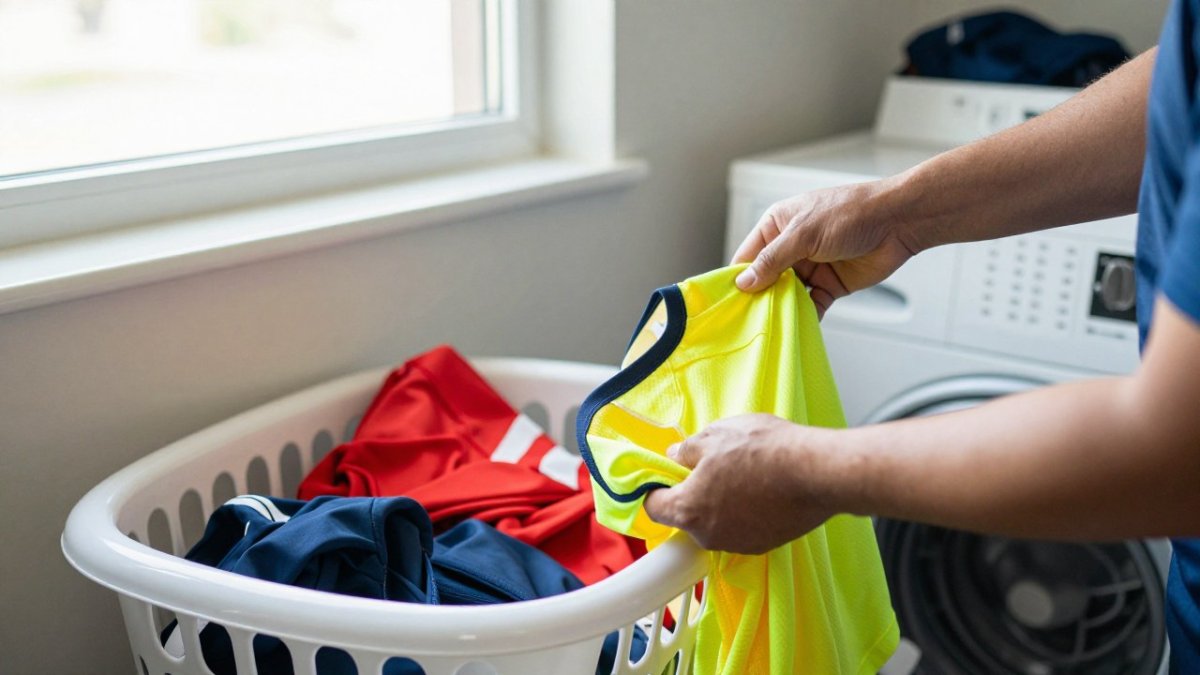
- Turn jerseys inside out. This shields graphics and the outer face from direct rubbing against the drum and other clothes.
- Fasten zippers and Velcro. Exposed hardware snags knits and pulls fibers loose.
- Wash with like items. Keep jerseys away from towels, denim, and anything with a rough texture.
- Choose a gentle or delicate cycle. Lower agitation means less friction.
- Use cold water. Warm and hot water can weaken fibers and make them more prone to breaking.
- Use a mild detergent. Harsh formulas can break down fiber surfaces over time.
- Skip fabric softener. Some softeners coat fibers, which can trap lint and make tangling easier.
Wash jerseys after each use rather than letting sweat and grime sit. Dirt and body oils make fibers stickier, which helps pills form. A quick, gentle wash often does more than an occasional heavy one.
Drying and Storing Jerseys to Limit Friction
Drying and storage are where a good wash routine can be undone. Heat and tumbling add abrasion, and how jerseys sit between uses determines how much they rub against gear, straps, and other garments. A complete routine accounts for moisture-wicking fabrics, printed graphics, and the friction sources unique to athletic wear.
A complete wash-and-dry sequence for performance jerseys
- Sort by fabric and color. Keep jerseys away from towels, denim, fleece, and anything with exposed zippers or Velcro. Rough fabrics act like sandpaper on a knit face.
- Close closures and turn inside out. Zip zippers, fasten Velcro, and turn jerseys inside out so graphics and the outer face are shielded from the drum and other items.
- Pre-treat sparingly. Use a mild detergent on stains and avoid harsh stain removers on printed areas. Bleach and strong solvents can weaken fibers and decoration.
- Choose a gentle or delicate cycle with cold water. Lower agitation and cooler water reduce fiber fatigue. Warm and hot water can weaken fibers and loosen adhesives on graphics.
- Use a mild detergent and skip fabric softener. Softeners can coat moisture-wicking fibers, trap lint, and make tangling easier.
- Keep the spin moderate. A high spin speed extracts water but can crease graphics and stress seams. A moderate spin leaves jerseys damp but intact.
- Air-dry flat or on a padded hanger. Lay jerseys flat or hang them so air circulates. Avoid wire hangers that create shoulder peaks and stress points.
- If machine drying, use low heat and remove slightly damp. Finish on a rack. Do not overload the dryer, because crowded loads tumble and rub more.
- Store fully dry and loosely folded. Never put a damp jersey into a bag or bin. Moisture plus friction mats fibers and encourages odor.
Sport-specific friction sources to manage
- Pads and equipment. Shoulder pads, chest protectors, and straps rub the same zones repeatedly. Rinse and dry those zones promptly, and avoid storing jerseys compressed under pads.
- Backpacks and bags. Shoulder straps abrade the upper back and shoulders. Carry jerseys separately or place them in a smooth pouch rather than stuffing them against a strap.
- Seat belts and car seats. Commuting in a jersey adds sustained friction. A smooth cover or a layer between the jersey and the belt reduces rubbing.
Storage that limits friction
- Fold loosely rather than cramming. Stacking jerseys in a tight bin presses fibers together and invites rubbing when you pull one out.
- Keep heavy items separate. Do not store jerseys under gear bags, cleats, or anything with rough edges.
- Avoid prolonged compression. A jersey packed tight for weeks can develop matted areas that look like pilling.
Watch out: A common mistake is tossing wet jerseys into a gym bag with other gear. Moisture plus friction speeds pilling and can leave fibers matted, and the effect is worse when the bag also holds grit from cleats or courts.
Protecting Names, Numbers and Heat-Applied Graphics
Printed names, numbers, badges, and heat-applied graphics can crack or peel if handled roughly, and the friction that causes pilling can damage them too.
- Wash inside out so the graphic faces the inside of the drum.
- Avoid high heat on graphics. Heat can loosen adhesive and cause cracking.
- Do not iron directly over lettering. If you must press a jersey, place a cloth over the graphic and use low heat.
How to Remove Pilling from Clothes at Home Safely
Pills that have already formed can usually be removed without harming the fabric. Work gently to avoid thinning the knit.
- Lay the jersey flat on a firm, clean surface.
- Stretch the fabric slightly so the pills stand up.
- Use a fabric shaver on low setting, or a handheld pill remover, moving in one direction.
- Work in small sections and check progress often.
- Stop when the surface looks even. Over-shaving can thin the fabric and create holes.
Do not use scissors or a razor blade. Both cut the fibers at an angle and can leave a rough, damaged spot that pills faster next time.
Using a Fabric Shaver Without Damaging Your Jersey
A fabric shaver is the most effective tool for stubborn pills, but it needs a light touch.
- Choose a shaver with a protective guard that limits how deep the blade can reach.
- Use the lowest setting for performance knits, which are often thinner than cotton.
- Keep the head flat against the fabric and avoid pressing hard.
Watch out: Shaving the same spot repeatedly can wear through the knit. If a pill comes back quickly, the fabric may be too worn for further shaving. At that point, replacing the jersey is the better option.
Booking Team Uniforms Built to Resist Pilling with Piercy Sports
If your team is ordering new jerseys, start with fabric and construction. Piercy Sports and Apparel offers custom team uniforms built for performance and longevity, with decoration options that include high-resolution digital printing, premium embroidery, and screen printing.
Ready to order? You can buy custom sports team uniforms with confidence and compare decoration methods, sizing tips, and ordering steps before you commit.
Frequently Asked Questions
Does pilling mean an athletic jersey is low quality?
Not necessarily. Pilling happens when short fibers rub together and tangle into small balls on the fabric surface, and nearly any knit fabric can do it with enough friction. Polyester and blended jerseys often resist pilling better than cotton, but even high-performance fabrics pill if they are washed roughly, dried at high heat, or rubbed against Velcro, zippers or rough gear. Pilling is a sign of wear and care habits as much as manufacturing quality. Turning jerseys inside out, using a gentle cycle and avoiding the dryer can slow it down.
What fabric is worst for pilling?
Loosely knit fabrics with short staple fibers pill the most. Cotton and cotton-heavy blends, fleece and some low-grade knits are prone to pilling because their fibers break and tangle easily. Fabrics with long, tightly twisted filaments, such as many polyester performance knits, generally hold up better. For athletic jerseys, a smooth, tightly knit polyester or poly-blend is usually the most pill-resistant choice.
Can a fabric shaver damage a jersey or its printed design?
A fabric shaver can damage a jersey if it is used on thin knits or over printed areas. The blades can thin the fabric or create holes. To use one safely, test it on an inside seam first, use light strokes with the fabric pulled taut, and avoid shaving directly over names, numbers or badges. Stop as soon as the pills are gone, since over-shaving wears down the surface faster than the pilling itself.
How do you remove pilling from a jersey without a razor?
A fabric comb, a pill-removing sweater stone or a lint roller can remove pills without a blade. Lay the jersey flat on a firm surface and gently brush or pull the pills in one direction. Use a lint roller for loose pills on the surface. These methods are slower than shaving but are safer for printed graphics and thin performance fabrics, and they reduce the risk of creating new thin spots.