Table of Contents
- Why Durable Custom Apparel Matters for Small Business Branding
- Low Minimum Custom Business Apparel: What Small Teams Should Know
- Durable Embroidery vs Screen Printing for Uniforms
- Best Fabrics for Work Uniforms That Last
- Laundering and Care Instructions for Longevity
- Small Batch vs Bulk Economics for Growing Teams
- Sustainability and Ethical Sourcing in Custom Apparel
- Frequently Asked Questions
Last Updated: September 14, 2026
Why Durable Custom Apparel Matters for Small Business Branding
Durable custom apparel for small businesses is clothing that keeps its color, shape, and printed or stitched logo after repeated wear and washing, making it a long-term branding asset rather than a disposable one. A shirt that fades after ten washes quietly damages the brand it was supposed to promote.
The stakes go beyond looks. Uniforms and branded workwear are often the first thing a customer notices, and they shape how professional a team appears. That’s why durability deserves more attention than it usually gets in buying decisions. Below, we’ll break down fabrics, decoration methods, minimums, and care so you can order apparel that still looks sharp a year from now.
Durability is a branding decision, not just a laundry concern. A logo that survives hundreds of washes keeps working for you long after the invoice is paid.
Low Minimum Custom Business Apparel: What Small Teams Should Know
Low minimum custom business apparel lets small teams order only the pieces they actually need instead of committing to hundreds of units upfront. Many suppliers set minimums per design or per decoration method, and those minimums can force a 12-person shop to buy 50 shirts it will never wear.
A common approach is to ask two questions before ordering: what is the minimum per design, and what is the minimum per decoration method? Screen printing often carries a higher per-design minimum because each color needs its own screen. Embroidery and digital printing tend to be more flexible for small runs, which matters when a roster changes mid-season.
Skipping the minimum question is the most expensive mistake small buyers make. You discover the real cost only after you’ve committed, when a reorder for three new hires triggers a fresh setup charge.
For growing teams, the practical move is to confirm reorder terms in writing before the first order. Ask whether mid-season additions carry setup fees again, and whether the supplier stores your logo file for quick repeat runs.
Durable Embroidery vs Screen Printing for Uniforms
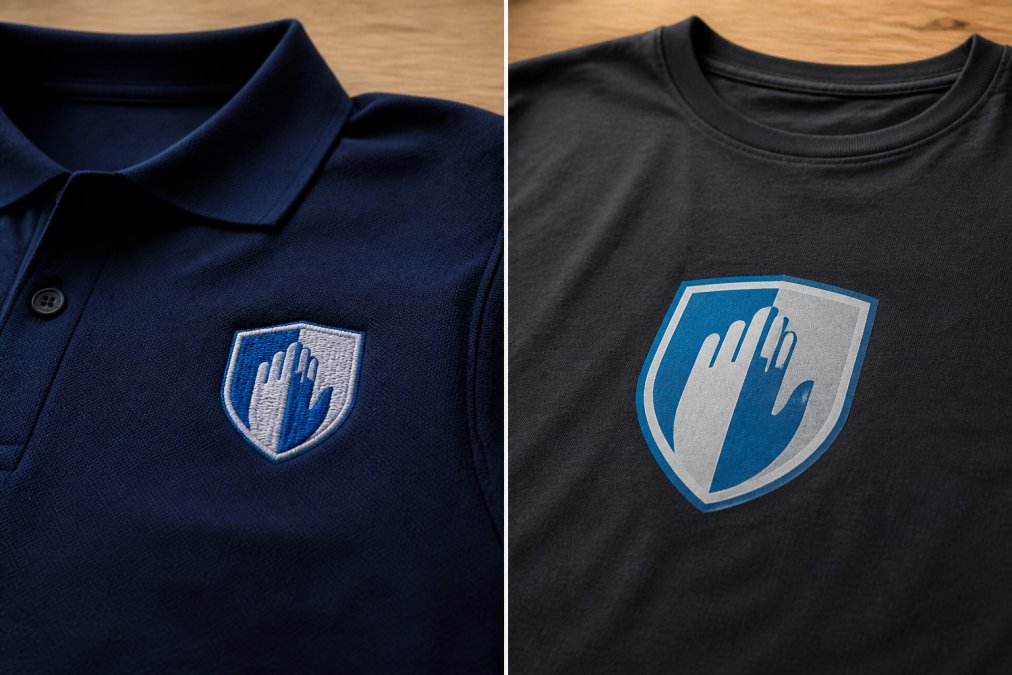
Durable embroidery vs screen printing for uniforms comes down to how each method physically attaches to fabric. Embroidery stitches thread through the garment, so the decoration is mechanical and has nothing to crack or peel. Screen printing lays ink on top of the fabric and depends on a chemical bond that only forms when the ink is properly cured. That single difference explains almost every durability outcome you will see on a job site or in a wash cycle.
How Each Method Holds Up After Repeated Washing
Embroidery generally outlasts the garment itself. The thread is stitched, not bonded, so there is nothing to crack. The failure modes are different: a cheap backing or too few stitches per inch can let the logo pucker or the fabric tear around the design, especially on lightweight knits.
Screen printing can also last for years, but only when three things line up: the ink type, the cure, and the fabric. Plastisol ink is the workhorse for cotton and cotton blends because it sits on the surface and produces a thick, opaque print. Water-based and discharge inks penetrate the fabric and feel softer, but they fade faster on dark garments and require tighter process control. The cure is the make-or-break step. Plastisol needs to reach a specific temperature across the entire ink film; undercured ink looks fine out of the dryer and then peels or cracks after a handful of washes (Apparel Screen Printing Inks: Pros and Cons of Every Classification). That is the classic source of peeling logos, and it is a production problem, not a wear problem.
What most guides miss is that fabric choice affects both methods. A tight weave holds a screen print cleanly, while a loose knit can let ink sit unevenly and crack along the yarn. Moisture-wicking performance fabrics, in particular, need inks formulated for synthetic fibers (often low-cure or silicone-based), or the print will struggle to bond. Embroidery on performance knits needs a lighter backing and a stitch count tuned to the fabric weight, or the garment will pucker.
Matching the Method to Your Garment and Budget
The right method depends on your garment, your logo, and your budget, not on which one sounds premium. Use this as a quick decision guide:
| Situation | Recommended method | Why |
|---|---|---|
| Small run, multi-color logo | Embroidery | No per-color screen setup; thread colors are effectively free |
| Large run, simple one-color logo | Screen printing | Lowest cost per unit at volume once screens are amortized |
| Performance or moisture-wicking fabric | Digital printing or embroidery | Bonds better with synthetics than plastisol |
| Logo with fine detail or gradients | Digital printing | Handles complexity without screens or stitch limits |
| Heavy canvas or work jacket | Embroidery | Stitches hold up to abrasion better than surface ink |
For most small businesses ordering fewer than a few dozen pieces, embroidery or digital printing is the safer bet because setup costs are lower and reorders are simpler. Screen printing earns its keep once volume rises and the design stays simple. Ask your supplier how they cure their ink and whether they test wash a sample before a full run.
Request a wash-test sample before committing to a large screen-printed run. A sample that survives home washes can provide valuable insight.
Best Fabrics for Work Uniforms That Last
The best fabrics for work uniforms balance durability with comfort, and the answer usually involves a blend rather than a single fiber. The reason is mechanical: cotton fibers are short and absorb moisture, so they swell, shrink, and abrade; polyester filaments are long and hydrophobic, so they resist shrinking, hold dye longer, and dry faster. Blending the two lets a garment take embroidery well while surviving frequent washing.
A few fiber and construction terms do most of the work when you are comparing quotes:
- Ring-spun vs open-end cotton. Ring-spun cotton is twisted tighter and feels softer, but it can pill faster under abrasion. Open-end (sometimes called carded) cotton is rougher but more abrasion-resistant, which is why it shows up in budget work tees.
- Cotton-to-poly ratio. A 50/50 blend is the classic workwear compromise. A 60/40 cotton-heavy blend feels softer but shrinks more. A 65/35 poly-heavy blend (common in polos) resists shrinking and fading better but can feel slicker.
- Moisture-wicking synthetics. These move perspiration away from the skin and keep colors from fading, but they require the right decoration method, as noted above. They also snag more easily than cotton, so they suit indoor and light-duty roles better than rough outdoor work.
- Spandex content. A small amount (typically 2 to 5 percent) adds stretch and helps a garment keep its shape through repeated wear and washing, which matters for fitted polos and performance tees (textileschool.com).
Fabric Weight and GSM Explained
Fabric weight, measured in GSM (grams per square meter), tells you how dense a garment is. A higher GSM generally means a thicker, more durable fabric, while a lower GSM feels lighter and breathes more. The number is the fastest way to tell a durable garment from a thin one before you ever touch it.
As a rough guide for work apparel:
- Under 150 GSM: lightweight, best for warm-weather promotional tees, not daily workwear
- 150 to 180 GSM: standard retail tee weight, fine for light-duty uniforms
- 180 to 220 GSM: midweight, the sweet spot for durable embroidered polos and tees
- 220 to 300 GSM: heavyweight, suited to work shirts, jackets, and garments that take abrasion
- Over 300 GSM: very heavy, common in outerwear and industrial workwear
GSM is not the whole story. Two 200 GSM shirts can wear very differently depending on yarn size, knit structure, and finish. A tighter knit with finer yarn can outlast a looser knit with thicker yarn even at the same weight. That is why asking for GSM alone is not enough; ask for GSM plus the fiber content and the knit type.
Ask for the GSM before you commit. Two shirts can look identical on a screen but wear very differently, and the number is the fastest way to tell a durable garment from a thin one.
Matching Fabric to the Job
Durability is not one property; it is a match between fabric and use. A 100 percent cotton tee is comfortable for a cafe or retail floor but will fade and shrink faster than a blend under daily washing. A 65/35 poly-cotton polo holds color and shape through a full year of shifts, which is why it dominates office and service uniforms. For trades that see abrasion, oil, or outdoor exposure, a heavier poly-cotton twill or a canvas work shirt at 250 GSM or above will outlast any standard tee. The practical move is to pick the lightest fabric that still meets the wear conditions, because the heaviest option is not always the most comfortable in warm conditions and discomfort leads to non-compliance.
Laundering and Care Instructions for Longevity
Laundering and care extend the life of custom apparel more than almost any other factor, and most damage happens in the wash. Turn garments inside out before washing to protect the decoration, and use cold water to reduce fading and shrinkage.
- Wash printed and embroidered items inside out on a gentle cycle
- Avoid fabric softener, which can break down inks and wicking finishes
- Skip the dryer when you can; air-drying preserves fit and colorfastness
- Never iron directly over a printed or embroidered logo
- Wash dark colors together to slow visible fading
Colorfastness and shrink resistance are built into good fabrics, but care habits decide how long they last. A uniform washed and dried correctly can stay presentable for years.
Small Batch vs Bulk Economics for Growing Teams
Small batch vs bulk economics is a genuine trade-off, not a case where one option always wins. Bulk ordering lowers the cost per unit and locks in consistent color across the whole run. Small batches reduce upfront spend and let you adjust as your team grows.
The catch is that bulk orders can leave you with leftover stock if your roster shrinks, while small batches may carry a higher per-piece cost. For a team with steady headcount, bulk usually wins. For a team hiring in waves, small batches with a confirmed reorder path often cost less in the long run because you’re not paying for unworn inventory.
Teams with predictable headcount and a stable logo: bulk ordering. Teams hiring in waves or rebranding soon: small batches with a locked-in reorder agreement.
Sustainability and Ethical Sourcing in Custom Apparel
Sustainability and ethical sourcing are increasingly part of the buying conversation, and small businesses can ask about them without overcomplicating an order. The practical questions are where the fabric comes from, how the garment was made, and whether the supplier can document it.
Durability itself is a sustainability strategy. A uniform that lasts three years instead of one means fewer replacements, less waste, and less money spent. When you’re comparing suppliers, ask whether they offer organic cotton, recycled polyester, or certifications that verify working conditions. The Federal Trade Commission’s guidance on environmental marketing claims is a useful reference for understanding what “green” claims actually mean, so you can ask sharper questions.
Choosing apparel built for longevity is one of the simplest ways a small business can reduce its footprint while protecting its brand.
Durable custom apparel only pays off when the fabric, decoration, and care all work together, and getting that combination right is where most small orders go wrong. Piercy Sports and Apparel handles it as a one-stop shop, pairing premium embroidery and high-resolution digital printing with top-grade products built for longevity and performance. Our tailored approach matches your exact vision, and our fast, reliable turnaround keeps your team looking sharp on schedule. Get started with Piercy Sports and Apparel and build a uniform program that still looks professional a year from now.
Frequently Asked Questions
How do I choose durable fabrics for custom business uniforms?
Look for heavyweight cotton or polyester blends with a tight weave. Check the fabric weight in GSM: 180-220 GSM works well for polos and button-downs, while 300+ GSM suits outerwear. Moisture-wicking polyester blends resist shrinking and fading better than thin cotton.
What are the benefits of embroidery vs screen printing for workwear?
Embroidery uses thread stitched directly into the garment, so it outlasts screen printing on polos, jackets, and hats. Screen printing lays ink on the surface and works better for large, colorful designs on t-shirts. For uniforms that get washed weekly, embroidery typically holds its shape and color longer. Screen printing costs less per piece on large runs but can crack if the ink is thin.
Where can small businesses find low minimum custom apparel orders?
Many local and regional custom apparel shops set minimums. Ask specifically about per-design minimums, not just per-order minimums. Some providers charge a small setup fee for small batches instead of forcing a large order. Always confirm reorder pricing before you commit, since roster changes mid-season are common.
What factors determine the longevity of custom branded clothing?
Four factors matter most: fabric weight and construction, decoration method, wash care, and fit. Heavier fabrics with double-stitched seams last longer. Embroidery outlasts screen printing on high-wear items. Washing inside-out in cold water and tumble drying low prevents cracking and shrinkage. Proper fit reduces stress on seams, so garments keep their shape through repeated wear.