Table of Contents
- What Is Direct to Garment Printing and How Long Does It Last?
- Factors Affecting DTG Print Life
- How to Wash DTG Shirts for Maximum Longevity
- DTG vs DTF Durability: Which Printing Method Lasts Longer?
- Signs of Fading, Cracking, and Print Degradation
- Best Practices for Garment Care and Maintenance
- Frequently Asked Questions
Last Updated: September 19, 2026
What Is Direct to Garment Printing and How Long Does It Last?
Direct to garment printing is a digital textile printing method that applies water-based ink directly onto fabric using specialized inkjet technology, and DTG printing durability depends on multiple factors including fabric type, pre-treatment quality, and proper curing. The ink penetrates the garment fibers rather than sitting on top of the surface, which fundamentally affects how long DTG printing lasts compared to other methods.
DTG printing durability typically ranges from 50 to 100 wash cycles before noticeable fading occurs, though this varies significantly based on fabric composition, pre-treatment quality, and garment care practices. The actual lifespan depends less on the printing method itself and more on how well the ink bonds with the fibers during the curing process and how the garment is subsequently handled.
Understanding the science behind durability helps you make informed decisions about which printing method suits your needs, and how to extend the life of printed garments through proper maintenance. Understanding the science behind durability helps you make informed decisions about which printing method suits your needs, and how to extend the life of printed garments through proper maintenance.
The key difference between DTG and other printing techniques is that the ink must cure properly and bond with the fabric fibers at a molecular level. Without this chemical bonding, even the best ink will fade, crack, or peel prematurely. The durability of your DTG-printed garments depends on multiple interconnected factors working together.
Factors Affecting DTG Print Life
Several variables influence how long direct to garment printing lasts on your finished garments. Understanding these factors helps explain why some DTG prints hold up beautifully after dozens of washes while others degrade quickly.
Fabric Composition and Fiber Type
The type of fabric you print on is one of the most critical determinants of DTG durability. Cotton substrates are the industry standard for DTG printing because the natural fibers absorb water-based ink effectively, allowing proper penetration and bonding. Cotton fibers have a porous structure that enables the ink to move into the material rather than remaining on the surface.
Polyester and synthetic blends present a different challenge. These materials have smoother, less porous surfaces that don’t absorb water-based ink as readily. When DTG ink sits on synthetic fibers without adequate pre-treatment, it remains more on the surface and is therefore more susceptible to mechanical abrasion during washing and drying. A 50/50 cotton-polyester blend requires different handling than 100% cotton to achieve comparable durability.
Fabric weight and weave pattern also matter. Heavier fabrics with tighter weaves tend to hold printed designs more durably than lightweight, loosely-woven materials. The structure of the fabric determines how effectively the fibers can anchor the ink molecules and resist degradation through repeated wash cycles.
Pre-treatment and Ink Penetration
Pre-treatment is the chemical process that prepares fabric to accept water-based ink. Without proper pre-treatment, ink sits on the surface rather than penetrating the fibers, leading to rapid fading and peeling. The pre-treatment solution opens up the fiber structure and creates a more receptive surface for ink bonding.
Quality pre-treatment directly correlates with print longevity. Garments that receive inadequate pre-treatment may show visible fading within 10-15 wash cycles, while properly pre-treated garments can withstand 50+ cycles before significant degradation. The pre-treatment must be applied evenly across the entire garment, inconsistent coverage creates weak spots where the ink doesn’t bond as securely.
Temperature and drying conditions during pre-treatment also influence ink penetration. The pre-treatment solution needs time to fully activate and allow the ink to migrate into the fiber structure. Rushing this phase or using incorrect temperatures compromises the chemical bonding that keeps the design vibrant through repeated washing.
Curing Process and Temperature
Curing is the heat treatment that sets the ink and completes the chemical bonding with fabric fibers. This step transforms wet ink into a permanent part of the garment. The curing temperature and duration must be precisely calibrated, too little heat and the ink doesn’t fully set; too much heat can damage the fabric or cause ink to become brittle and crack.
Most DTG printing uses heat press curing at temperatures between 300-350°F, maintained for 30-60 seconds depending on fabric type and ink formulation. The heat activates the ink’s binders, allowing them to form cross-links with the cellulose in cotton fibers or the polymer chains in synthetic materials. This molecular bonding is what prevents the ink from washing away or fading prematurely.
Garments that skip the curing step or receive insufficient heat treatment show dramatic durability loss. Without proper curing, the ink remains in a semi-set state where it’s vulnerable to water penetration, mechanical stress, and chemical degradation from detergents.
How to Wash DTG Shirts for Maximum Longevity
Proper garment care after printing is as important as the printing process itself. How you wash, dry, and store DTG-printed garments determines whether your investment maintains vibrant colors and crisp designs for years or fades within months.
Washing Temperature and Detergent Selection
Cold water washing is the single most important habit for preserving DTG print quality. Hot water accelerates the breakdown of the chemical bonds between ink and fibers, causing faster fading and color bleeding. Washing in cold water, below 60°F, significantly extends print life by reducing the thermal stress on the ink-fiber bonding.
The detergent you choose matters as much as water temperature. Harsh, enzyme-based detergents break down the binders that hold ink to fabric. Mild, pH-neutral detergents designed for delicate fabrics are gentler on printed designs. Detergents containing bleach or optical brighteners are particularly damaging to DTG prints because these chemicals attack the ink molecules directly.
Avoid fabric softeners and dryer sheets with printed garments. These products leave a waxy coating that interferes with the ink’s adhesion and accelerates peeling. The coating creates a barrier between the ink and fibers, making the print more vulnerable to mechanical abrasion during subsequent washing and wearing.
Drying Methods and Mechanical Abrasion
Tumble drying in a hot dryer is one of the fastest ways to degrade DTG prints. The combination of heat and mechanical friction from tumbling breaks down the chemical bonds and causes physical wear on the printed surface. Prints fade noticeably faster when garments are machine-dried repeatedly compared to air-dried alternatives.
Air-drying or line-drying preserves DTG prints far more effectively. Lay printed garments flat or hang them to dry in indirect sunlight. This eliminates the mechanical abrasion of tumbling and avoids the heat stress of machine drying. If you must use a dryer, use the lowest heat setting and remove garments while slightly damp to minimize exposure to high temperatures.
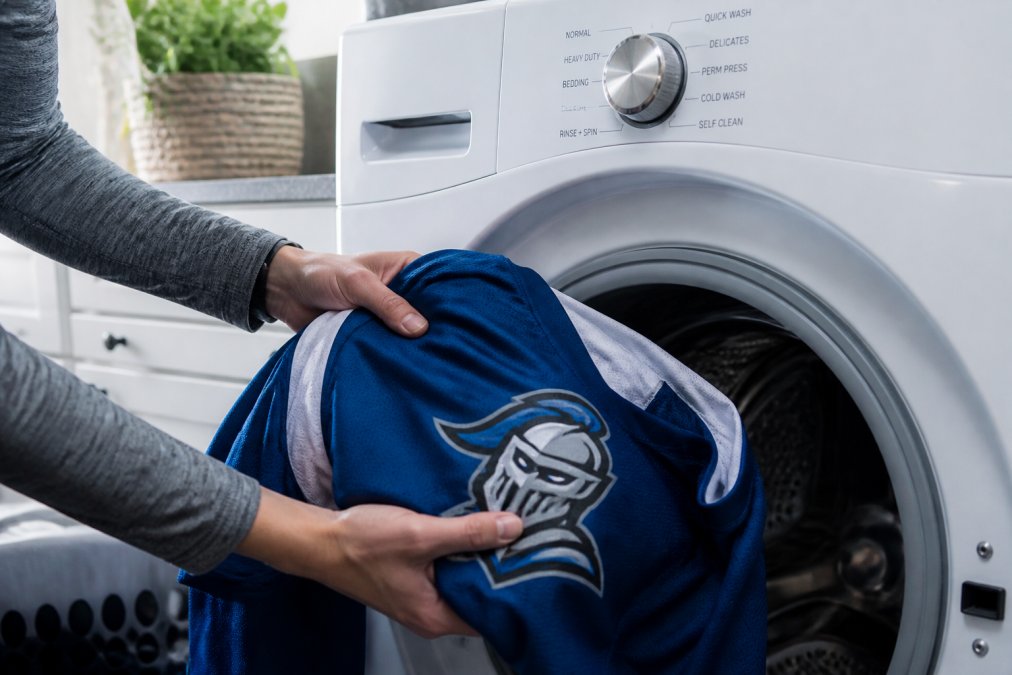
Washing printed garments inside-out reduces direct friction on the design. This simple step protects the printed surface from rubbing against other garments and the washing machine drum during the wash cycle. For high-wear garments like team uniforms that see frequent washing, inside-out washing can meaningfully extend print longevity.
DTG vs DTF Durability: Which Printing Method Lasts Longer?
DTF (direct-to-film) printing has emerged as an alternative to DTG, and durability comparisons between the two methods are important for teams and businesses deciding which printing approach to use.
DTG printing bonds ink directly to fabric fibers through the pre-treatment and curing process, creating durability that depends entirely on fabric type and garment care. DTF printing transfers ink from a film carrier to fabric using heat, which can create a slightly different durability profile.
Signs of Fading, Cracking, and Print Degradation
Understanding how DTG prints degrade helps you recognize when a garment has reached the end of its useful life and when poor care is unnecessarily shortening print longevity.
Best Practices for Garment Care and Maintenance
Extending the life of DTG-printed garments requires consistent care practices that minimize stress on the ink-fiber bonding.
| Garment Care Factor | Recommended Practice | Expected Impact |
|---|---|---|
| Water Temperature | Wash in cold water below 60°F | Extends print life by 30-40% |
| Detergent Type | Use mild, pH-neutral detergent | Prevents color fading and peeling |
| Drying Method | Air-dry or use lowest heat setting | Prevents cracking and color bleeding |
| Washing Frequency | Turn inside-out; use gentle cycle | Reduces mechanical abrasion |
| Storage | Keep in cool, dry location away from sunlight | Prevents premature fading |
| Fabric Softeners | Avoid completely | Prevents ink-fiber bonding breakdown |
Frequently Asked Questions
How many washes can a DTG print typically withstand?
Direct to garment prints typically last 50-100 wash cycles when cared for properly, with some high-quality prints lasting longer depending on fabric type and washing method. Cold water washing and air drying extend this lifespan significantly. Prints on 100% cotton with proper pre-treatment and curing perform better than those on blends or lower-quality substrates. The number of washes is not fixed, it depends on wash temperature, detergent type, and how aggressively the garment is handled during drying.
What are the best practices for washing DTG-printed shirts?
Wash DTG shirts inside-out in cold water with mild detergent to minimize color fading and mechanical stress on the print. Avoid bleach, fabric softeners, and enzyme-based detergents that can break down the ink-fiber bond. Use a gentle or delicate wash cycle, and air dry flat or hang-dry rather than tumble drying. High heat and friction accelerate print degradation.
Does fabric type affect the longevity of DTG prints?
Yes, fabric composition significantly impacts DTG print durability. One hundred percent cotton provides the best substrate for DTG printing because water-based inks bond directly to cellulose fibers, creating strong chemical adhesion. Polyester blends and synthetic fabrics may show reduced wash fastness because the ink sits on the surface rather than penetrating fibers as deeply. Lower-quality or loosely woven fabrics experience more print peeling and cracking over time due to increased mechanical abrasion during washing and wearing.
How does pretreatment affect the lifespan of a DTG design?
Pre-treatment is critical for DTG durability. It prepares the fabric surface to accept and hold water-based ink, improving ink penetration and chemical bonding to fibers. Garments treated with proper pre-treatment solutions show significantly better wash fastness and color retention than untreated prints. Without adequate pre-treatment, prints are prone to fading after just 20-30 washes and may begin cracking or peeling sooner. Professional DTG printers apply pre-treatment uniformly to ensure consistent print quality and longevity across all garments.