Table of Contents
- Start With a Plan: Budget, Roster, and League Rules
- Youth Sports Uniform Sizing Chart: Getting Fit Right the First Time
- Sublimated vs Screen Printed Uniforms: Choosing the Right Decoration
- Team Uniform Order Form Template: What to Include
- Lead Times, Minimums, and How to Avoid Deadline Panic
- How to Care for Custom Sports Uniforms So Logos Last
- Managing Reorders, Mid-Season Changes, and Multi-Season Inventory
- Conclusion
- Frequently Asked Questions
Last Updated: September 10, 2026
Start With a Plan: Budget, Roster, and League Rules
A youth sports uniform ordering guide only works if it starts before you collect a single size, and uniform ordering succeeds only with a plan in place. Three things decide a smooth season: budget, final roster, and league rulebook.
Most coaches do this backwards: they pick a design, then discover the league bans certain colors or that half the families can’t cover the cost. Lock the boring stuff first.
- Budget: Separate the per-player cost from league fees. Families absorb one hit more easily than two.
- Roster: Order for your projected headcount plus a small buffer. Mid-season additions are common, and a few extra blanks save a panic reorder.
- League rules: Check color restrictions, logo placement, number sizing, and whether the league mandates a specific fit profile. The National Federation of State High School Associations uniform rules is a useful reference for how organized play handles numbering and jersey requirements, even at the youth level.
One common mistake: coaches lock a design before confirming league approval, then pay for rework. Confirm compliance in writing with your league coordinator first.
Youth Sports Uniform Sizing Chart: Getting Fit Right the First Time
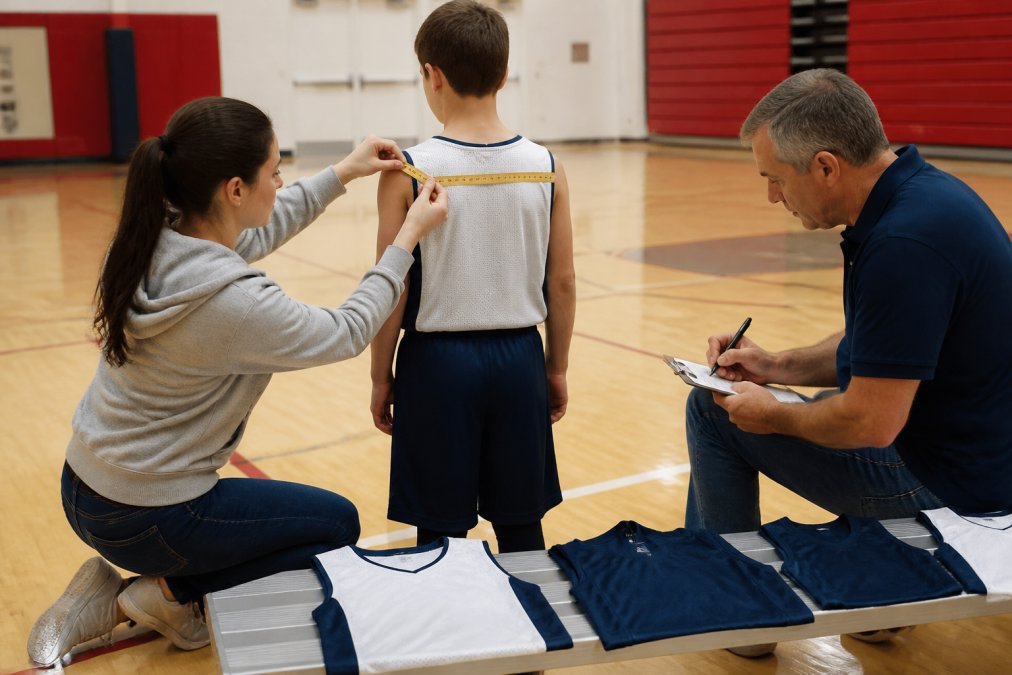
A youth sports uniform sizing chart maps body measurements, not clothing sizes, to each garment size. Kids’ “medium” varies wildly between brands, so a chart built on chest, waist, and height eliminates most guesswork.
A Working Youth Jersey Size Chart
Use this as a starting framework, then confirm against your provider’s spec sheet, because cut and fabric weight shift the numbers by an inch or more. Measurements are in inches.
| Size | Chest | Waist | Height | Typical Age Range |
|---|---|---|---|---|
| Youth XS | 22-24 | 20-22 | 40-44 | 5-6 |
| Youth S | 25-27 | 22-24 | 45-49 | 7-8 |
| Youth M | 28-30 | 24-26 | 50-54 | 9-10 |
| Youth L | 31-33 | 26-28 | 55-59 | 11-12 |
| Youth XL | 34-36 | 28-30 | 60-64 | 13-14 |
| Adult S | 35-37 | 29-31 | 65-67 | 14+ |
Two things to note. The overlap between Youth XL and Adult S is real, a tall, lean 13-year-old often fits an adult small better than a youth XL, which is cut wider through the torso. And shorts sizing tracks waist and inseam, not height, so pull a separate shorts chart.
How to Collect Accurate Sizes From Families
Never ask parents what size their child wears. Ask for measurements, and give them a two-minute method.
- Chest: measure around the fullest point, tape level, arms down
- Waist: measure at the natural waistline, not the hip
- Height: barefoot, against a wall
- Inseam (for shorts and pants): floor to crotch, shoes off
- Preferred fit: snug, standard, or roomy
Send a simple form with these fields. It takes families less time than finding a tape measure and cuts exchanges dramatically. Many coordinators collect sizes alongside registration fees, so the data arrives in one pass.
Fit Profiles, Stretch Fabric, and Growth Room
Fit profile is how a garment sits on the body: compression, athletic, standard, or loose. Youth athletes grow fast, so most teams default to standard or athletic cuts with a little room.
Stretch fabric changes the math: a polyester blend with spandex flexes with the player and tolerates a growth spurt better than a rigid weave. Ordering in early fall for spring, add one size of growth room on the length, not the width. A jersey that’s too wide looks sloppy; one that’s slightly long just looks like it fits next year too.
When to Size Up vs. Size Down
- Size up on goalkeeper jerseys, hoodies, and anything worn over pads. Layering eats an inch of chest room.
- Size down on compression base layers. They should fit tight to work.
- Stay true to measurement on sublimated jerseys. The dye process doesn’t shrink the finished garment the way a heavy screen-printed cotton tee can after a hot wash.
- Ask about shrinkage before you commit. Most performance polyester knits are pre-shrunk, but cotton-blend practice tees can lose a half inch in length after the first hot dry (fabriclink.com).
Handling the Outlier Body Types
Every roster has at least one athlete who doesn’t fit the chart, a stocky lineman, a tall, thin distance runner, or a player who needs adaptive sizing. Don’t force them into the nearest row. Most custom providers can cut a one-off size or adjust sleeve and inseam length for a modest upcharge, cheaper than reordering after the first game. Ask about single-piece custom sizing before you finalize the roster order.
Sublimated vs Screen Printed Uniforms: Choosing the Right Decoration
Sublimated vs screen printed uniforms comes down to design complexity and quantity. Sublimation dyes the design into the fabric, handling full-color, all-over patterns with no added cost per color. Screen printing applies ink in layers, keeping costs low on simple designs at higher volumes.
| Method | Best For | Design Limits | Durability |
|---|---|---|---|
| Sublimation | Full-color, all-over designs | No limit on colors | Excellent, won’t crack |
| Screen printing | Bold, simple logos, large runs | Cost rises with each color | Very good on quality ink |
| Embroidery | Logos, names, polos | Detail limited by stitch size | Excellent, premium look |
| Heat transfer | Names, numbers, small runs | Good color range | Good with proper care |
How Each Method Actually Works
Sublimation prints a design in reverse onto transfer paper using sublimation inks. Heat and pressure turn those inks into gas, which bonds into the polyester fibers themselves. The color becomes part of the fabric, not a layer on top, that’s why sublimated graphics never crack, peel, or fade, and why the process only works on polyester or high-poly blends. On cotton, the ink has nothing to bond to.
Screen printing pushes plastisol or water-based ink through a mesh screen, one screen per color. Each color is a separate pass, screen, and setup charge. A one-color logo on 30 shirts is cheap; a six-color mascot on 30 shirts means six setups spread across a small run, where cost climbs fast.
Embroidery stitches thread directly into the garment. It’s the most durable and premium-looking option, but fine detail, small text, and gradients don’t translate, the needle can only render so much before the design turns to mush.
Heat transfer prints the design onto a carrier, then presses it onto the garment. It’s the most flexible for one-off names and numbers because there’s no screen setup, but the bond is only as good as the pressing and care routine that follows.
The Cost Drivers Nobody Explains
- Screen printing: setup charge per color, plus per-piece ink cost. Setup is fixed, so it amortizes better on larger runs.
- Sublimation: no per-color charge, but the design must be cut and sewn after printing, which adds production time.
- Embroidery: priced by stitch count. A dense 12,000-stitch logo costs more than a simple 4,000-stitch mark.
- Heat transfer: low setup, higher per-piece cost, best for small or highly individualized runs.
A common mistake is choosing screen printing for a six-color mascot design. The per-color setup makes it expensive and the result can look heavy. Sublimation handles that artwork natively.
When Embroidery and Heat Transfer Make More Sense
Embroidery wins on polos, jackets, and coaching staff apparel. It reads as premium and survives years of washing. The trade-off is detail: fine text and gradients don’t translate well to thread.
Heat transfer suits player numbering and small batches, letting you add individual names and numbers without a full screen setup. For a roster of 15 where every jersey is unique, that flexibility matters.
The Sustainability Angle Most Guides Skip
None of the standard comparison tables mention fabric sourcing, and that’s a gap worth closing. If your league has an environmental committee, a sponsor with sustainability goals, or parents who ask, you have options:
- Recycled polyester (rPET) is made from post-consumer plastic bottles and performs nearly identically to virgin polyester. It sublimates well, so full-color designs work without compromise.
- Organic cotton blends suit practice tees and fan gear, though they don’t sublimate, plan on screen printing or heat transfer.
- Water-based and discharge inks cut the solvent load in screen printing and give a softer hand-feel, at a slightly higher cost and with more color-matching nuance.
Ask your provider whether recycled fabric carries a price premium. The gap has often narrowed to a few percent, and a line on the order form noting recycled content can satisfy sponsor reporting without changing the design.
Request a physical sample swatch of any recycled or water-based option before you commit a full roster. Screen colors and fabric hand-feel vary enough between mills that a digital mockup alone won’t tell you how the finished uniform looks under gym lighting.
Team Uniform Order Form Template: What to Include
A team uniform order form template captures every order detail before production starts. Get it right and you avoid the rework that eats your season.
Copy this structure:
Team Uniform Order Form
Team name: __________ League: __________ Season: __________
Coordinator name and phone: __________
Garment and style number: __________
Decoration method: __________
Colorway (Pantone or hex): __________
Roster (name, number, size, fit profile): __________
Logo file attached: __________ (vector preferred)
Mockup approval initials: __________ Date: __________
Required in-hands date: __________
Quantity and buffer: __________
Vector artwork matters here. A low-resolution logo will print soft or pixelated. If your only file is a screenshot, ask your provider whether they can redraw it before you commit. Piercy Sports and Apparel handles high-resolution digital printing and premium embroidery, and can work with teams to get artwork print-ready.
Digital Mockup Approval Workflows That Prevent Rework
Most uniform disasters trace back to a mockup nobody actually approved. Build a simple workflow:
- Provider sends a digital mockup with exact colors and placement
- Coordinator reviews against league rules and the order form
- Coordinator collects sign-off from one designated decision-maker, not the whole team
- Approved mockup is dated and filed
- Production starts only after written approval
The bottleneck is usually too many approvers. One person signs. Everyone else sees the final mockup for reference only.
Lead Times, Minimums, and How to Avoid Deadline Panic
Lead time is the total window from approved mockup to uniforms in hand, and it’s longer than most coaches assume. Production, decoration, and shipping all stack.
Plan backward from your first game:
- Custom decorated orders: allow several weeks for production plus shipping
- Simple stock with a printed logo: shorter, but still confirm the window
- Rush requests: possible with some providers, but never assume it
Ask about minimum order quantity early. Some shops require large runs; others work with smaller youth rosters. Piercy Sports and Apparel builds tailored solutions to match exact client vision, which matters for leagues with 15 kids.
The single biggest cause of deadline panic is approving the mockup late. Every day you delay approval pushes the in-hands date back by a day. Set an internal approval deadline two weeks before you think you need it.
How to Care for Custom Sports Uniforms So Logos Last
How to care for custom sports uniforms determines whether your logos still look sharp at season’s end. The rules are simple and apply to every decoration method.
- Wash inside out in cold water
- Skip fabric softener, which breaks down inks and adhesives (cleaninginstitute.org)
- No bleach, no high heat
- Air dry or tumble on low
- Keep Velcro away from jersey fabric, it snags and pulls threads
- Turn sublimated and printed garments inside out before washing
Color fastness holds up well when you follow these steps. Failures almost always come from hot water and high dryer heat, not the printing itself. Embroidery is the most forgiving, but even thread dulls under repeated high heat.
Managing Reorders, Mid-Season Changes, and Multi-Season Inventory
Mid-season roster changes are normal, so plan for them. Keep a small buffer of blank garments in your most common sizes, and save your approved mockup and artwork files so a reorder doesn’t start from scratch.
For multi-season use, store uniforms clean and dry, labeled by size. Carryover inventory saves money next year, but only if you know what you have, a simple spreadsheet beats a shelf full of mystery boxes.
Ask your provider to keep your artwork and mockup on file. When a new player joins in week three, a reorder becomes a quick email instead of a redesign. Confirm whether reorder fees apply before you commit, so mid-season additions don’t surprise your budget.
Conclusion
The teams that avoid uniform chaos aren’t lucky. They plan the budget and rules first, measure kids properly, pick the right decoration method, and lock a mockup before production. That discipline is the whole game.
Piercy Sports and Apparel brings it together as a one-stop shop for custom team uniforms, business apparel, and sports gear, with high-resolution digital printing, premium embroidery, and screen printing, ensuring durable designs that look vibrant and professional with fast, reliable turnaround times. Tailored solutions keep your season on schedule.
Get started with Piercy Sports and Apparel and give your team a look that holds up from the first game to the last.
Frequently Asked Questions
What is the best material for youth sports uniforms?
Polyester blend performance apparel dominates for a reason: it pulls sweat away from the body, holds color well, and survives repeated washing. Look for moisture-wicking fabric in the 150-190 GSM range for breathability and durability. Stretch fabric with a small spandex percentage helps with fit and movement. For decoration, sublimation works best on polyester, while screen printing and embroidery suit cotton-rich spirit wear. Ask your supplier how each fabric option handles color fastness after 20-plus washes.
How do I determine the right sizes for a youth sports team?
Use the supplier’s youth sports uniform sizing chart and measure players rather than guessing. Collect chest, waist, and height for each athlete, then add one size of growth room for younger players. Request sample jerseys in two or three sizes so families can try them on before the bulk order. Record every measurement on your team uniform order form template with the player’s name and number so reorders match the original fit profile.
How far in advance should you order custom team uniforms?
Start the process 8 to 10 weeks before your first game. That gives you time for artwork cleanup, digital mockup approval, and a production window that typically runs 2 to 4 weeks depending on decoration method and quantity. Sublimated uniforms and complex embroidery take longer than basic screen printing. Rush options exist, but they depend on the shop’s current capacity and your order size, so confirm the turnaround time in writing before you commit.
What is the difference between screen printing and embroidery for jerseys?
Screen printing pushes ink through a mesh stencil and works well for bold, flat designs on large areas, making it cost-effective at higher quantities. Embroidery stitches thread directly into the garment and suits logos, names, and smaller details on polos, jackets, and hats. Heat transfer sits between the two, offering fine detail on performance fabric. For jerseys with complex gradients or full-color graphics, sublimation is often the better fit.
How can I manage uniform distribution for a large youth team?
Label every garment with the player’s name and number before distribution day. Sort uniforms into individual bags by roster order, then set up a pickup table with a sign-out sheet. Keep a master spreadsheet tracking who received what, including sizes and any extras like warm-up tops. Store two or three spare pieces in common youth sizes for late additions or replacements, and log every handoff so nothing goes missing between seasons.
What information do I need to provide to a uniform supplier?
Send your roster with player names, numbers, and sizes, plus your team colors and any league regulations on logos or placement. Provide vector artwork for your logo, or ask whether the shop offers artwork cleanup if your file is low quality. Include the exact deadline, decoration method preference, and quantity per size. Pantone matching helps if brand colors must be exact. A complete team uniform order form template keeps all of this in one document.
Can I order uniforms for a small team without hitting high minimums?
Many shops set minimum order quantities for screen printing because each color needs its own screen, which raises setup costs on small runs. Sublimation and heat transfer often have lower minimums since they don’t require screens. If your league has 15 players, ask about combining sizes or choosing a decoration method with a lower minimum. Confirm the minimum order quantity before you finalize your design, because it can change which method makes sense.
How do I keep logos from cracking or peeling after a few washes?
Wash uniforms inside out in cold water on a gentle cycle, and skip fabric softener because it breaks down adhesives and inks. Turn heat transfer and screen printed garments inside out before drying, or hang them to air dry. Avoid ironing directly over any decoration. Embroidery holds up best to repeated washing, which is why it’s common on polos and outerwear. Following the garment care label extends the life of any custom sports uniform.